The Future of Interior Design in a Tech-Driven World
The interior design industry looks very different from how it once did. Technology-driven shifts are nothing new, but the pace and impact of change today are undeniable.
What was once a paper-heavy, in-person, and hustle-driven profession has evolved into one that is increasingly tech-enabled, remote (or at least hybrid), and focused on optimizing workflows through AI. From client presentations to 3D visuals and beyond, technology is reshaping how designers work.
This raises an important question: what are the new industry standards in this increasingly tech-driven profession—and what does the future of interior design really look like?

Designers Are Scaling with Remote Work and AI
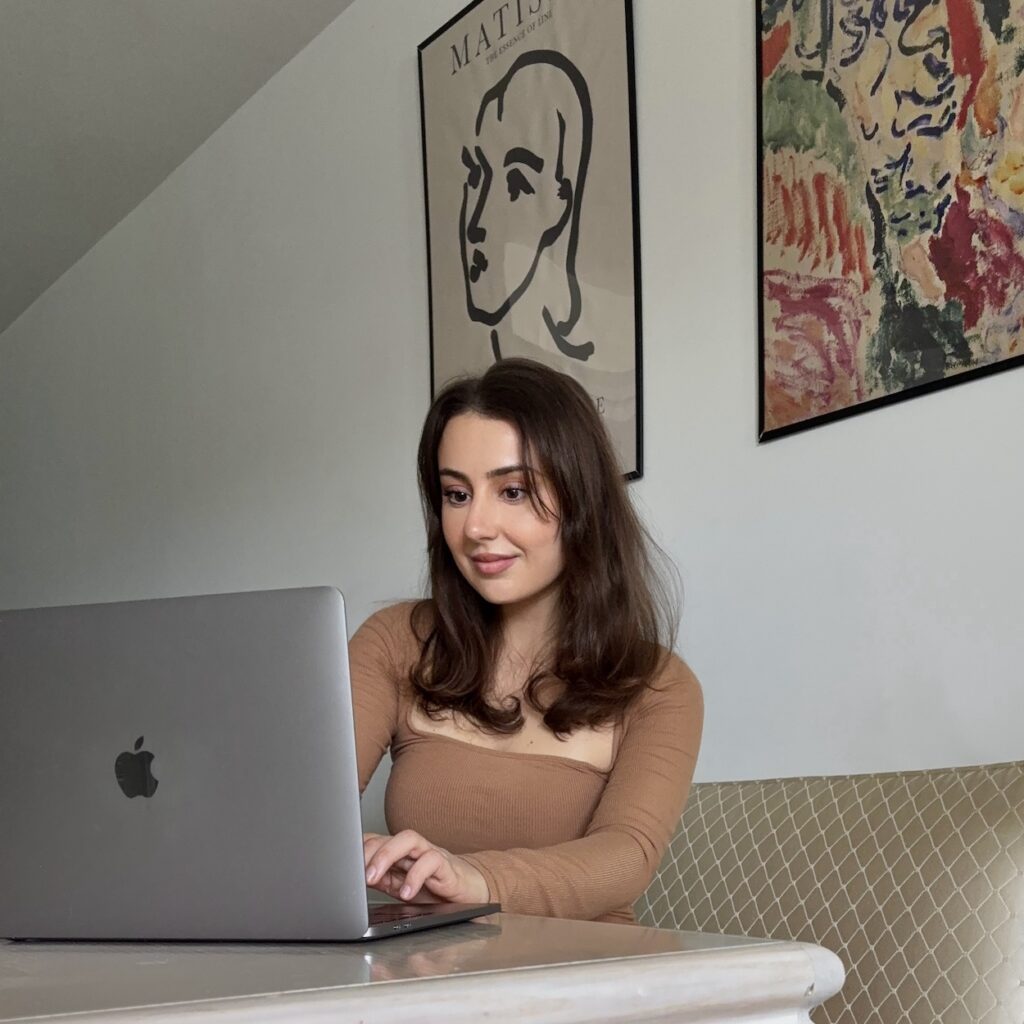
The shift: Remote Interior Design
I recently collaborated with the team at DesignSpec, where I spoke about how I scaled my interior design business online. Here is the link if you want to watch the webinar: How To Work Remotely As An Interior Designer. While remote interior design might sound like a novel concept to some, it has actually been around for over a decade.
Platforms like Decorilla (founded in 2012) and Havenly (launched around 2014) were early players in shifting the industry toward online interior design services. These companies began laying the groundwork for remote interior design well before the 2019 pandemic, which ultimately accelerated the shift and pushed even more designers to work remotely.
However, I would argue that the shift to remote interior design actually began well before platforms like Havenly or Decorilla entered the space, or even way before the pandemic. It happened gradually, with each advancement in technology that allowed firms to evolve to hybrid workflows.
Online furniture sourcing, digital communication, and cloud-based software all started to transform how designers worked and presented to clients. Over time, it became less necessary to be physically present, as more of the design process moved online. I would argue that all interior design firms today operate in a hybrid manner, with less and less need for in-person meetings as technology bridges the gap for site visits (more on that below), client meetings, presentations, and product sourcing.
Now, online interior design—commonly known as e-design—is a popular service for clients who want to collaborate with interior designers without the price tag of full-service design.
For designers like myself, this model offers more freedom to work from anywhere, connect with clients beyond our usual geographic region, and deliver a “low-touch” design experience that is efficient and scalable.
The AI Shift
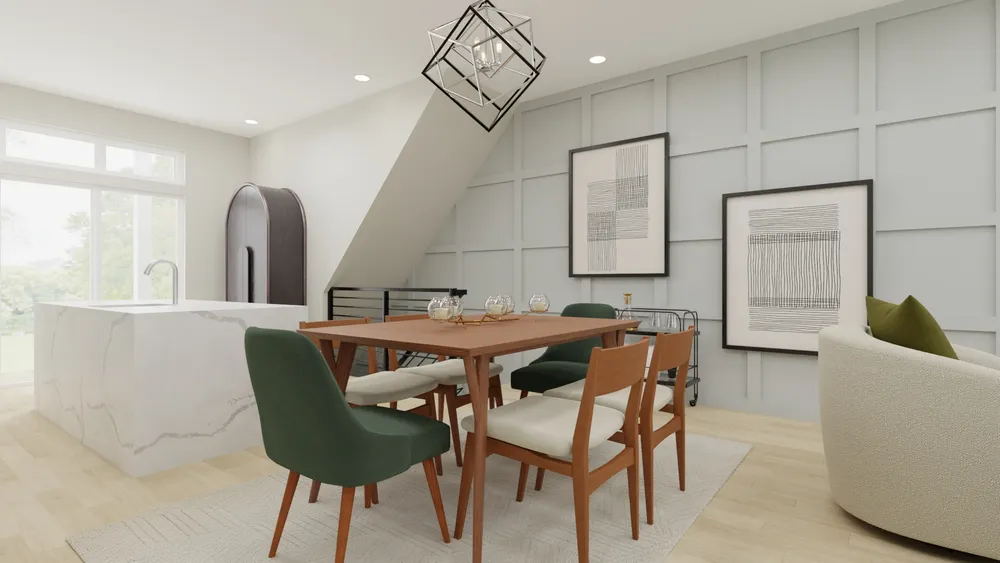
Now, let’s touch on the hottest topic in interior design since grey floors: AI.
This shift has already begun—and it’s still evolving the way interior designers work. It’s also laying a new foundation for industry standards in software, workflows, and processes.
Many have even started to question whether there is a future for interior design at all, especially with the rise of AI tools for design enthusiasts—some of which claim you can “skip the cost of hiring a designer.”
As someone who works across in-person, hybrid, and fully remote design models—and as a reviewer of the latest interior design technology, including AI—I believe I have a well-rounded perspective to share.
AI is certainly enabling some design enthusiasts to take on their own projects. That much is true. But what often gets overlooked are the many critical aspects of design that go far beyond generating ideas or visuals.
AI may assist with creative concepts, but what about:
- Ensuring projects are code-compliant
- Iterating designs as changes and progress unfold
- Sourcing viable, real-world furniture and materials
- Coordinating with trades and vendors
- Troubleshooting issues on-site or during execution
- Taking responsibility when problems arise
^ This is where designers are invaluable.
So, will AI erase the need for interior designers in the future?
Not unless AI is willing to take responsibility for the mistakes that may occur due to AI hallucinations and poor human oversight.
Will some people choose to skip hiring a designer and use apps instead?
Of course.
There are people who watch YouTube videos on “how to cut your own hair.” That doesn’t mean professional hairstylists are being replaced.
How AI Workflows are Improving Interior Designers’ Processes
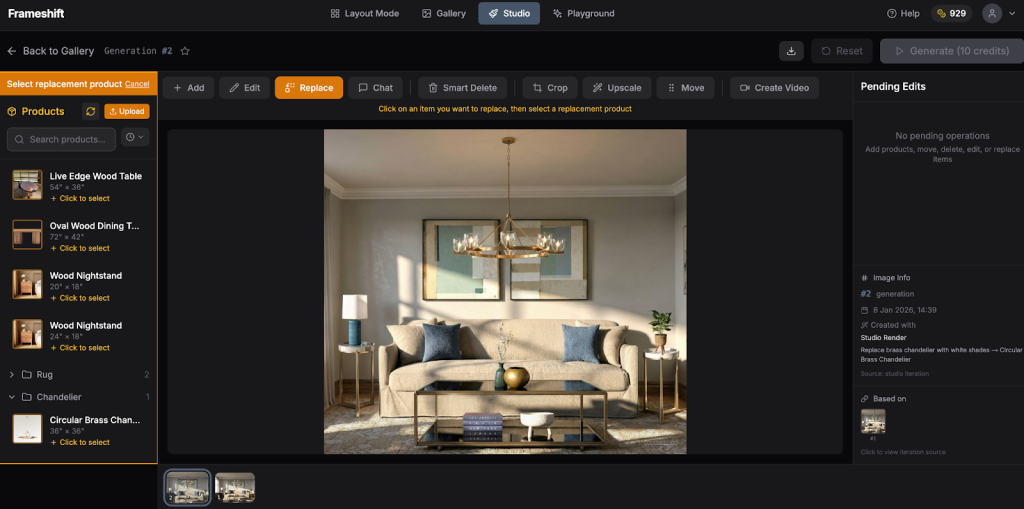
More than anything, AI is enabling interior designers to work faster, more efficiently, and to present more impressive, immersive experiences to their clients.
This shift is not eliminating the need for interior designers in the future—it’s reshaping how designers work, in a very positive way.
Gone are the days of spending hours fine-tuning photorealistic rendering software, juggling endless tools, or manually building detailed 3D models from scratch. Even mood board creation is becoming significantly streamlined.
Whatever you need support with—business planning, marketing, emails, sourcing/ procurement, FF&E, or 3D modelling—there are now AI tools designed to assist across almost every part of the workflow.
For me personally, the biggest shift has been in how I render and present 3D visuals to my clients.
Interior Design software such as DesignFiles has integrated AI-powered rendering capabilities directly into its platforms, helping push forward the AI revolution within interior design workflows. Other software platforms, such as Programa, are investing heavily in AI-driven sourcing and procurement automation. Other software for interior designers, such as Foyr Neo, a 2D and 3D modelling software, is also investing heavily in integrating AI tools directly into the platform.
Then there are AIs such as MidJourney, which assist during the conceptual design phase, and ChatGPT and Google’s Gemini, which help streamline administrative and organizational tasks.
AI tools in beta, such as Frameshift and Roomform.ai, are completely changing the game for designers with promising features that streamline the 3D modelling process, eliminate the need for site visits through LiDAR technology, and enable designers and clients to collaborate effectively in a remote setting.
Read: The Best AI Tools For Interior Designers’ Workflow
The Future Of Interior Design Is AI and Tech-Forward
The conclusion here is that the future of interior design looks bright—especially for designers who may be running solo practices and need support with the many tasks only another designer would truly understand. Technology and AI continue to evolve rapidly, with new advancements emerging almost monthly, all aimed at saving designers’ time and reducing manual effort.
Interior design is becoming increasingly tech-reliant, particularly for remote designers like myself who depend on a range of tools to bridge the gap created by not being physically present on-site with clients. Even traditional full-service designers, who are feeling the growing pressure of project demands, rising expectations, and faster delivery timelines, can benefit from AI and technology to streamline administrative tasks and create more efficient workflows.
Ultimately, the industry is moving toward a future that is more remote—or at the very least highly hybrid—tech-driven, AI-enhanced, and significantly more efficient.
To read more on this topic, read: The Future of Interior Design Is Remote, Tech-Enabled, and System-Driven.
Click Here To Shop My Favourite Home Goods
Let’s design your space together, virtually.