Will AI Replace Interior Designers? 3 Reasons It Won’t
AI is making some jobs obsolete, from admin roles all the way to creative ones. Considering what AI can now do in the interior design space, you may be an interior designer (or an aspiring one) wondering: will AI replace interior designers, too?
So if you’re thinking about jumping ship and pivoting your career, or wondering whether you should pursue interior design in the first place, I’d encourage you to read this article from my perspective: a designer who has adopted an AI workflow and has tested AI interior design tools first-hand (and even gets paid to do so).
Will AI Replace Interior Designers? Everyone Needs to Eat

My perspective on the AI interior design tools used by the average homeowner is this: everyone needs to eat. Some people find McDonald’s suitable, others prefer fine dining, and some can even afford a private chef. The point is, everyone is going to eat.
The homeowners using AI interior design tools in place of an interior designer probably weren’t the folks looking for an interior designer in the first place. These are the DIYers, and AI is simply a new tool that helps them make their own design choices at home.
In fact, this is now where most consumers start. Client behaviour is changing. Instead of flipping through magazines for inspiration, or even scrolling Pinterest (which has become a sea of AI interiors), homeowners are using tools like Planner5D to guide their design choices and come up with ideas using AI.
Nearly all of my clients now come to me with AI-enhanced images.
But here’s the point: they are still coming to me.
Why People Still Hire Interior Designers in the Age of AI

Here are the reasons people are still coming to interior designers.
1. People don’t fully trust AI to design
AI outputs, images and advice should be taken with a grain of salt. Unfortunately, some people use AI to replace their own judgment and the research behind design choices, which leads to questionable design decisions that are neither well thought out nor revolutionary.
This means your expertise and knowledge as an interior designer are actually more valuable than ever. You, as the designer, can fact-check AI, draw on your own knowledge base to make informed decisions, and come up with more creative solutions.
AI is good at creating a pretty picture and maybe getting a design direction going, but it isn’t doing the research behind the design: making sure it’s feasible to build, liaising with trades, assessing the budget and so on. That’s where the interior designer comes in, bringing their education, trade and vendor relationships, personal style, human creativity and more.
2. They want the experience of the design process
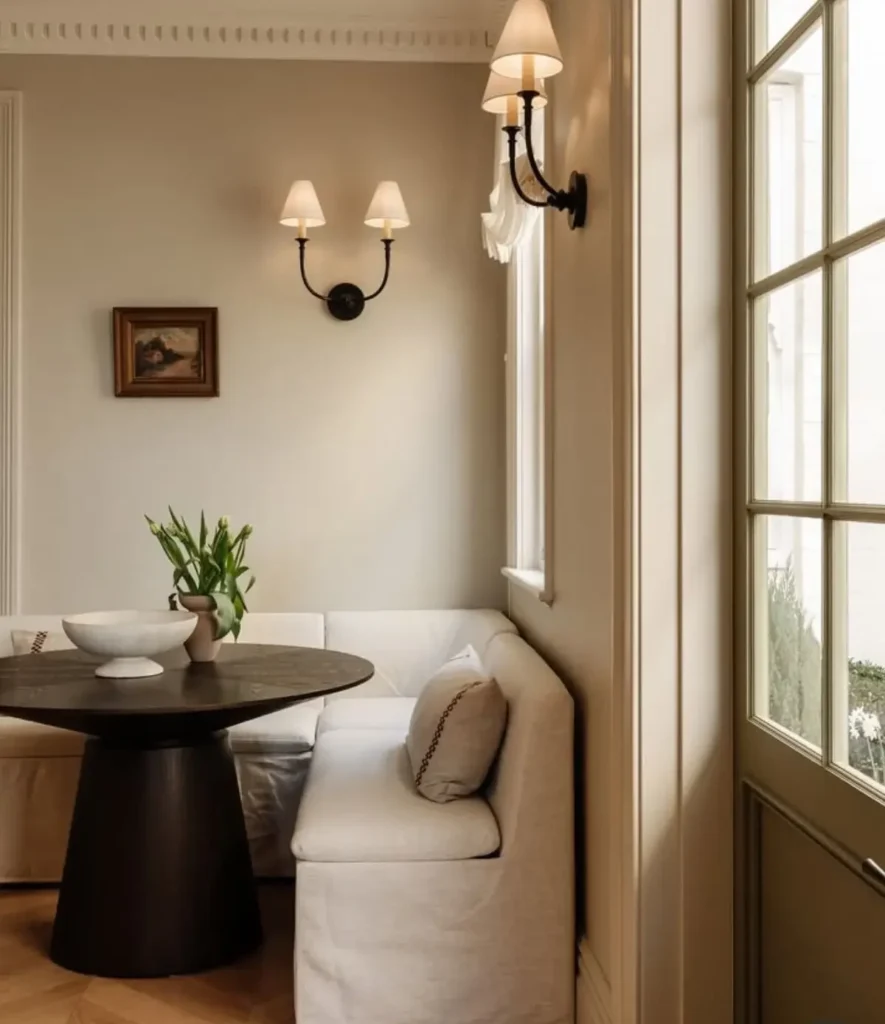
Some folks need design help but don’t care about a five-star experience. Others want a personal connection with their designer and are looking for the white-glove experience: someone who takes care of everything from the site measure to procurement and installation. AI simply can’t do that.
3. AI makes mistakes
AI isn’t perfect. Even though I rely heavily on AI in my work, I don’t take everything it says as the final answer.
It struggles to read scale, has a hard time coming up with the best floor plan, and can’t quite grasp design principles in a way that turns them into something substantial.
People recognize this. While AI interior design tools may be enough for some lower-level decorating jobs, they can’t piece together something bespoke or well thought out.
How Interior Design Jobs are Changing with AI

Although interior design jobs are AI-proof, that doesn’t mean interior designers, or anyone working in the industry, will be unaffected.
The way designers work, and the collaborative experience between designer and client, is changing, and it’s changing fast and for good.
As I mentioned, the way clients communicate with their designers is changing, the way they share inspiration photos is changing, and expectations for designer deliverables are changing, given what people can now create on their own.
This means the designer’s role is shifting. Designers used to have authority and trust from the start; now they have to build connection and trust through their knowledge, education and connections, and through their ability to connect with a client beyond “they can create good designs.”
The Biggest Change: Your Workflow

The biggest change, though, is the interior designer’s workflow. Interior design has largely become an industry that runs on a lot of tech: email, drafting software, 3D modelling software, site measure apps, and all the software used to run a business and handle the admin (I break down my favourites in the best interior design software, from drafting to invoicing).
AI is changing the interior design tech stack and workflow for the better. If anything, I think the jobs tied to admin work, creating presentations, and all the not-so-fun parts will diminish as AI workflows become the norm and the average designer and design team can automate their admin.
Design firms have typically had staff dedicated to procurement, order tracking, sourcing and every other step it takes to pull together a design presentation and bring it to life.
But solo designers and smaller teams have always struggled to find efficient workflows that leave room for creative work, instead of endless hours in Excel and other software just to get client deliverables out on time. Small teams and solo designers quickly end up swimming in admin and tedious tasks that drain the life out of them.
That means more unbillable hours, because a designer simply can’t justify billing clients for admin work. Which, in turn, means less money in the designer’s pocket at year-end.
With most designers and small teams already fighting for clients, dealing with clients shopping them, and watching profit margins shrink, the last thing a designer needs is to spend hours on tasks AI can do in minutes. (If you want a quick taste, start with these Claude prompts for interior designers that save hours on admin.)
That’s why, if you want to stay in the interior design industry, it’s essential to adopt an AI workflow and make AI benefit your job, not replace it.
Ready to make AI work for you, not against you?
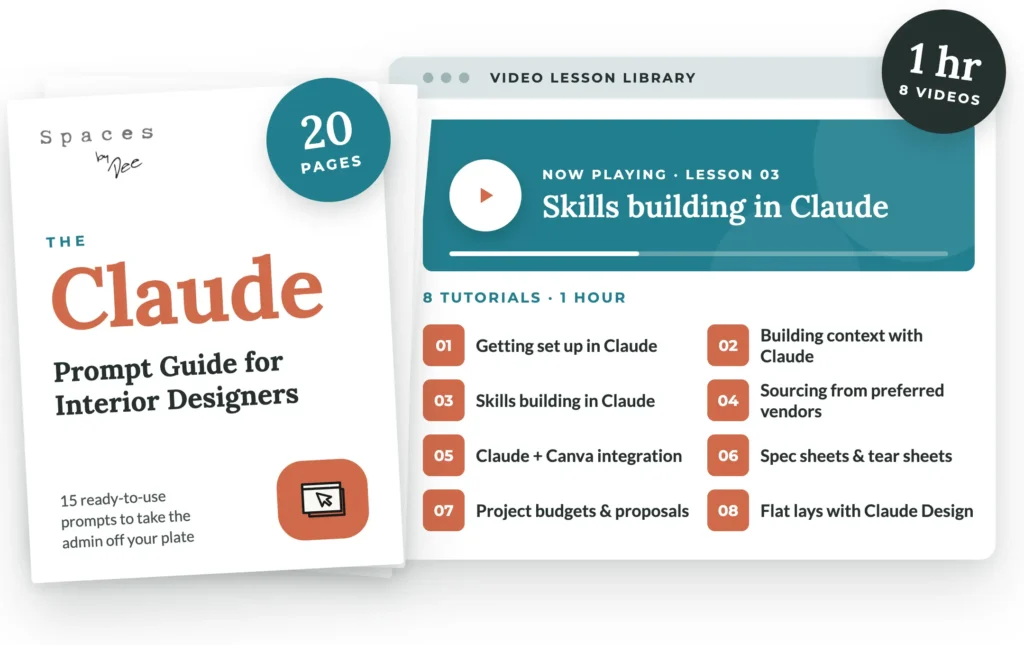
This is exactly why I created AI Foundations for Interior Designers, my course that teaches you the same AI workflow I use every day in my own design business.
It’s built for solo designers and small design teams who want to spend less time on admin and more time on the creative work (and the clients) that actually pay the bills. Inside, I walk you step by step through how to:
- Set up Claude so you get great results from day one
- Build repeatable skills that handle your recurring work for you
- Research your clients and every unique project with AI
- Source faster by letting AI shortlist every viable product option
- Create client-ready tear sheets and trade-ready FF&E schedules
- Put together proposals and budgets without wrestling with Excel
- Automate your order tracking and client status updates
You don’t need to be tech-savvy, and you don’t need to overhaul your business overnight. You just need a workflow that gives you your time back, so you can do more of the one thing AI can’t: design.
So, will AI replace interior designers? No. But designers who know how to use AI will have a real edge over those who don’t. Make sure you’re one of them.