So, we all know I’m no stranger to testing out interior design AIs. If you haven’t already, check out my post: The Best and Worst Interior Design AI: A Designer’s Review—where I put some of the hottest tools on the market to the test. But while scrolling Facebook recently and seeing people use ChatGPT to design their spaces, it hit me—I’ve never actually tested ChatGPT to interior design. And considering how much we all rely on it these days, I figured I had to put it to the test.
So here we are. I’m putting the AI we all can’t live without to the test: Who designs better—me (designer) or ChatGPT?
The stakes are high here, people, I might not have a job once we see the results.
Read: Latest Bedroom Designs For Airbnb Created With AI Design

AVOID COSTLY (AND UGLY) DESIGN MISTAKES

The Test – Can ChatGPT Interior Design?
For this challenge, I’m using a real-life project I’m currently working on: a bachelor condo redesign for a client. It’s the perfect scenario to test ChatGPT’s capabilities in a real-world context. Here’s the space:
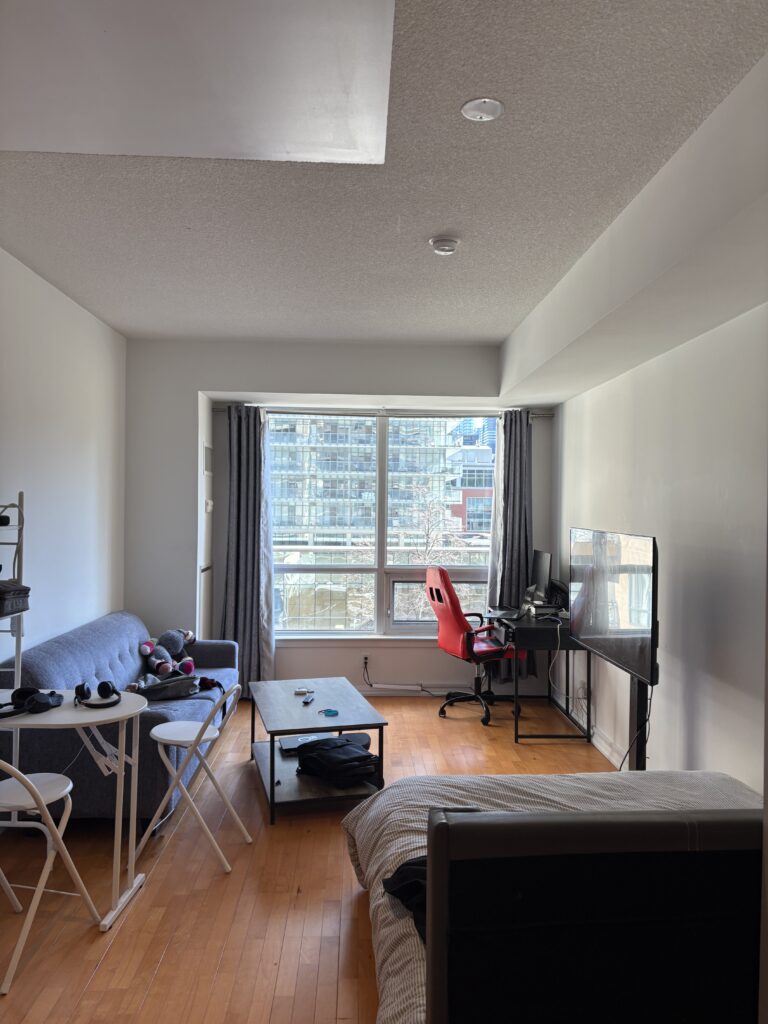
As you can see, it needs a little (or a lot) of TLC. Now, here is the floor plan:

I created this floor plan using Planner5D, read my review of the software here: I Tested The Best Interior Design AI Phone App.
The Design Intent
The design intent here was to create a functional space that includes a place to sleep, a sofa, TV viewing, and one table that can be used for both dining and working. The current floor plan isn’t making the most of the space—it feels awkward and inefficient.
First, let me show you the space plan I created:
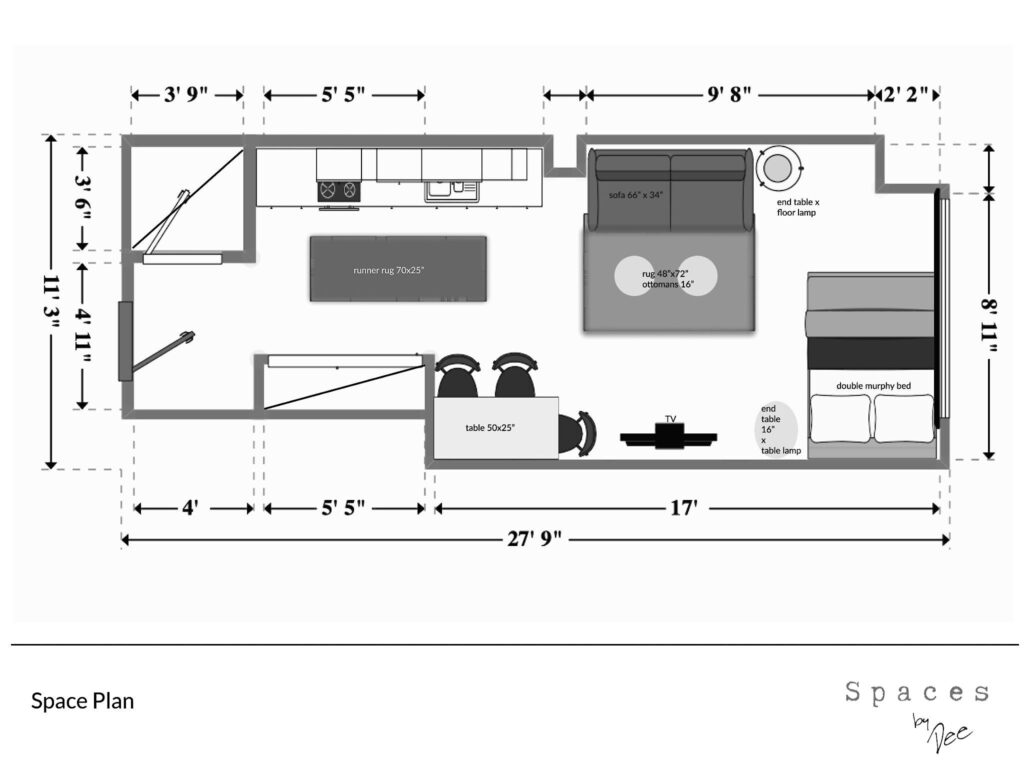
In my space plan, I’ve decided to move the bed to the farthest corner of the room, since the client doesn’t mind being up against the window. In a bachelor condo, you typically have to break a few design “rules” to make things work — and that’s okay.
This will be a Murphy bed, so it’s practical and space-saving. Even when the bed is down, it still allows for a comfortable 32″ passageway from the sofa, which will be a smaller condo sized sofa at 66″ wide, paired with two small ottomans, so the client can kick their feet up and relax.
The dining area will double as a workspace. Since the client doesn’t work from home very often, consolidating the dining and office zones made sense and kept the layout efficient.
The TV is on wheels, which is a great flexible feature — there’s plenty of room to roll it in front of the bed if needed.
I love Samsung’s TV options, such as the Frame TV, and Sero. Sleek and amazing for saving space/ having dual functions. I also really like LG’s Stand By Me TV as well!
All in all, I think this new layout is going to work really well for the space and the client’s lifestyle.
ChatGPT’s Space Plan
Ok, so now it’s time to see what ChatGPT could come up with. I attached the floor plan and wrote this message:
Hi ChatGPT,
I was hoping you could help with space planning for a bachelor condo using the attached floor plan. The condo needs to accommodate the following:
- A double bed
- A TV (on wheels, so it’s moveable)
- A table for work and dining
- A sofa
Please create the most functional layout based on the provided floor plan, and feel free to add anything else you think would enhance the space.
Seems like a fair prompt to me. Here is what it came out with after about 10 mins:
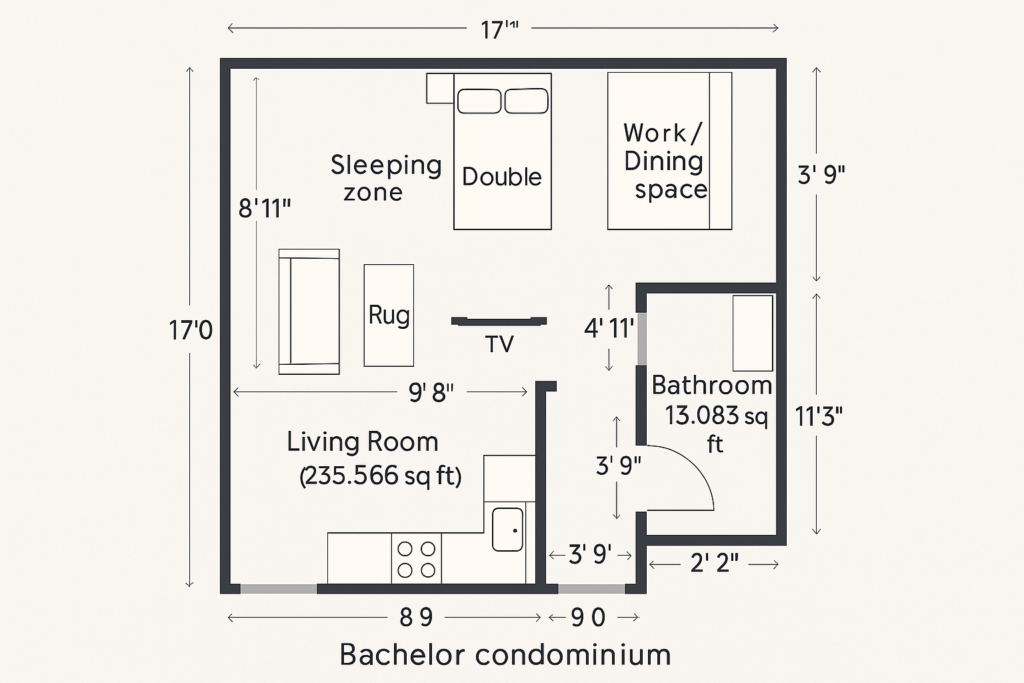
Ummmmm, what? Well, this space plan was a completely different floor plan. So, I called out ChatGPT:

Ok, so ChatGPT gave me another space plan which was:
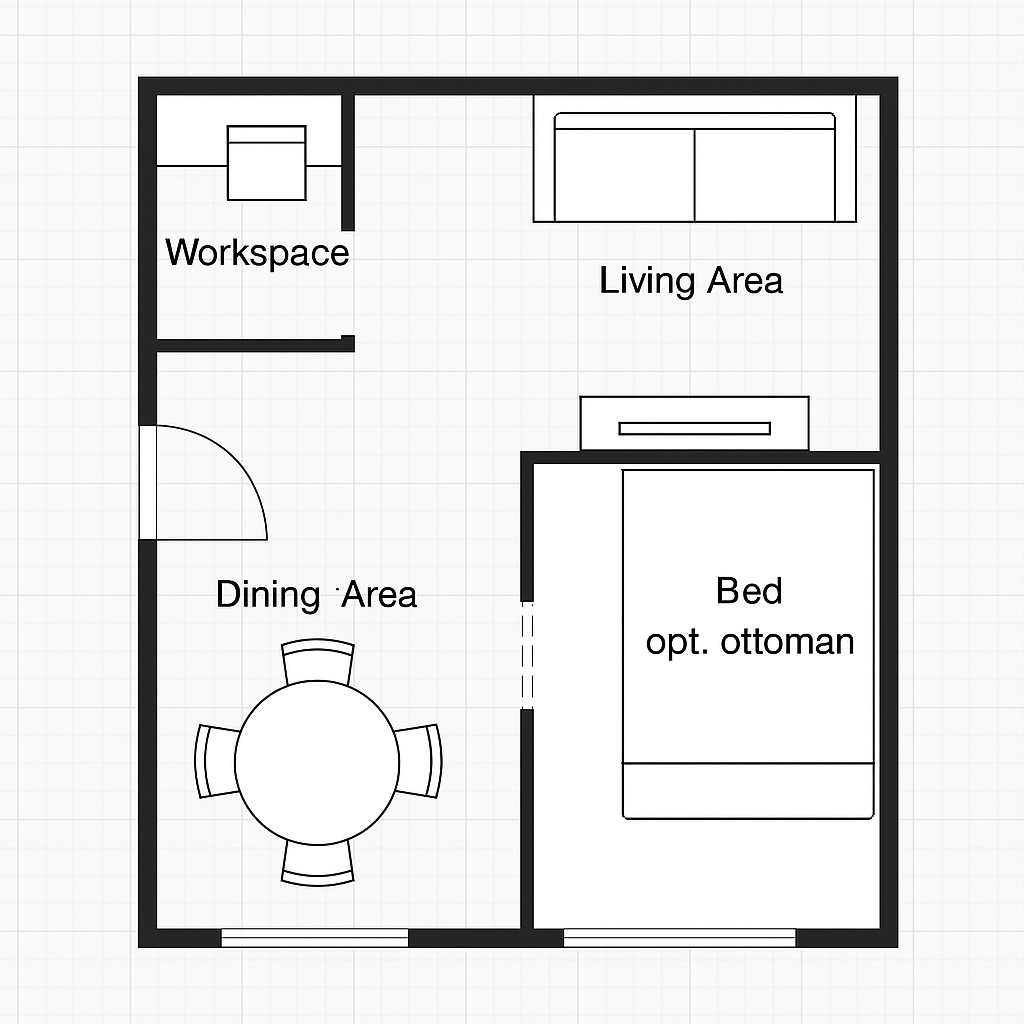
WRONG AGAIN! At this point, I gave up on ChatGPT to space plan. I guess it could not read the floor plan like interior design specific AIs.
Ok, so let’s move on and see if it can re-decorate the space at least. I uploaded the before photo and told it to re-decorate the space and make it earthy, using colours such as green and yellow and to also include natural materials. This is what the client and I are actually going for. This is what ChatGPT gave me:
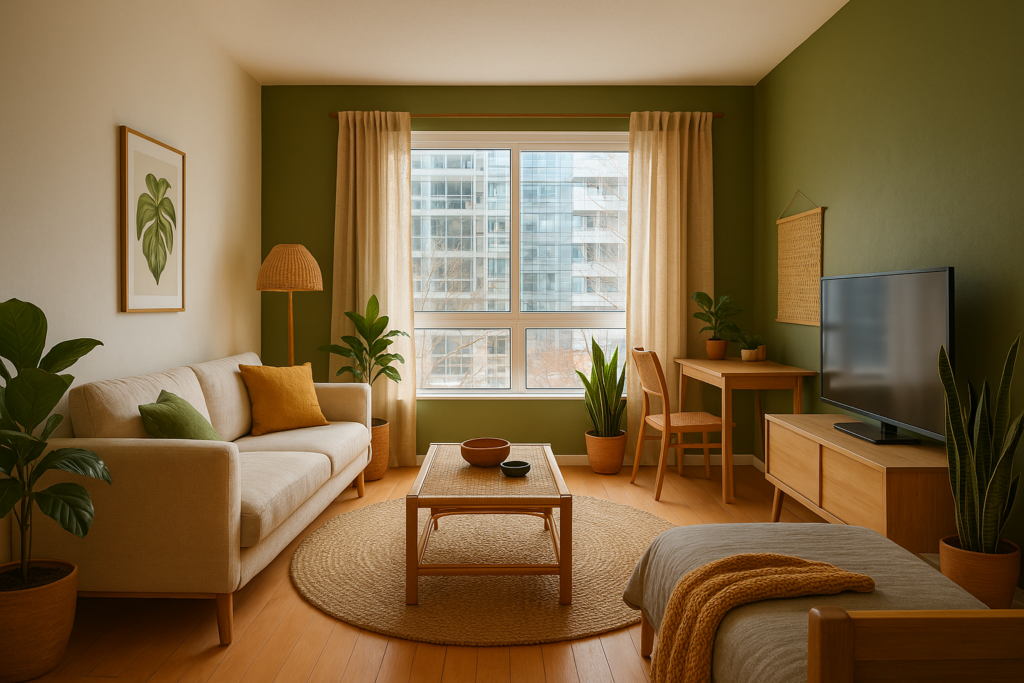
You know what, it’s not too shabby. The AI did change some of the structural features of the condo, but overall, it delivered on what was asked. It’s a bit basic and predictable, sure—but I can’t say it did a bad job.
Would I present this to a client? No.
Does this output spark any ideas for me? Also, no.
For the average person (non-designer) who does not have a creative bone in their body, maybe this would help.
I’ll say that the quality of the render is what most impresses me – it looks pretty realistic.
How To Interior Design With ChatGPT
I first published this blog post in April 2025, and fast-forward to September 2025, my opinion on ChatGPT’s interior design capabilities has changed. I’m saying this because ChatGPT can give you great results—depending on how you prompt it—and I’ve learned my way around the tool enough to come to that conclusion.
After further testing and figuring out how ChatGPT (even the free version) works best for interior design, I’ve cracked the code. I even made a simple guide showing how you can use ChatGPT to design your entire home. Get it here.
My Issue With Interior Design AI and ChatGPT

Furnishing, interior decorating, and design is a thoughtful process. My issue with creating “designs” using AI is that, at the end of the day, it’s just a picture — there’s no real research behind it.
As a designer, I don’t just sell a final snapshot to clients. When I create a render, a mood board, or a floor plan, I’m thinking far beyond aesthetics. I consider what’s actually realistic and achievable within the space.
For example, is the client renting or do they own? That drastically changes my approach. What’s their budget? Are we designing with a dream budget in mind, or are we working within strict financial limits? That plays a huge role in what’s actually possible.
I also think about where I’m sourcing products from, what’s available locally, and how accessible those pieces are. I don’t just slap together random Pinterest-worthy images. Design needs to be achievable.
AI generates what looks good, but there’s no real research or context behind it. So while the result might be visually appealing, how realistic or feasible is it? Usually, not very.
I think AI can be helpful in generating ideas and sparking inspiration — and that’s great! But to really design, you need to dive into the nitty-gritty. That’s where the true value lies.
The Conclusion – Who/What Interior Designs Better?
Well, if you made it here, you probably know what I am going to say. The winner here, is a real life human interior designer.
There are so many interior design AIs on the market, and I test them regularly. Read The Best and Worst Interior Design AI,A Designer’s Review. And spoiler alert, they do preform better than ChatGPT.
So, yes, I will still be using my friend ChatGPT to help me out with other things, but not so much space planning. I would encourage people to work with a real-life designer to really design.
Read: The Complete Review of AI Interior Design Tools
How To Get a Monthly AI Interior Design PRO Subscription for Free
My friends at The Remodel AI App are giving away a free monthly PRO subscription to three of my readers. All you have to do is book a 30-minute virtual consultation with me. We’ll use the session to help guide the direction of your project. You’ll get expert interior design advice plus a free month subscription to one of the best AI interior design tools out there.
👉 Use this special link to book. The first three readers to complete their consultation will have their free PRO subscription activated!
Click Here To Shop My Favourite Home Goods
Let’s design your space together, virtually.