I Ordered From Material Bank: Here Is My Review
The interior design industry is one that is constantly evolving. As someone who has been in this industry for nearly a decade, I’ve experienced many of the shifts firsthand—from the rise of AI to changes in sourcing, and especially the way designers work following COVID-19.
One of the biggest changes to come out of the pandemic was the growing popularity of e-design, or virtual interior design services. For those who aren’t familiar, e-design allows designers to work with clients remotely, offering complete design packages without ever having to meet in person.

As the industry has evolved, so has the way interior designers source materials and products. Companies like Material Bank have completely changed the sourcing experience. Material Bank, the trade-focused counterpart to DesignShop, partners with hundreds of vendors to allow interior designers to order architectural finishes and samples without ever setting foot in a showroom.
This is a huge advantage for designers.
If you’re a virtual designer like me, it allows you to offer your clients a tactile design experience, even when you’re working remotely. Instead of asking clients to trust a photo on a screen, you can have real material samples shipped directly to their door so they can see and feel the products before making a decision.
My Experience Using Material Bank
Recently, I decided to use Material Bank while sourcing finishes for a project consisting of three bathrooms I designed for clients in the San Francisco area. I wanted to see how the platform performed from start to finish, from ordering samples all the way through procurement.
Here’s what my experience was like.
Sourcing from Material Bank
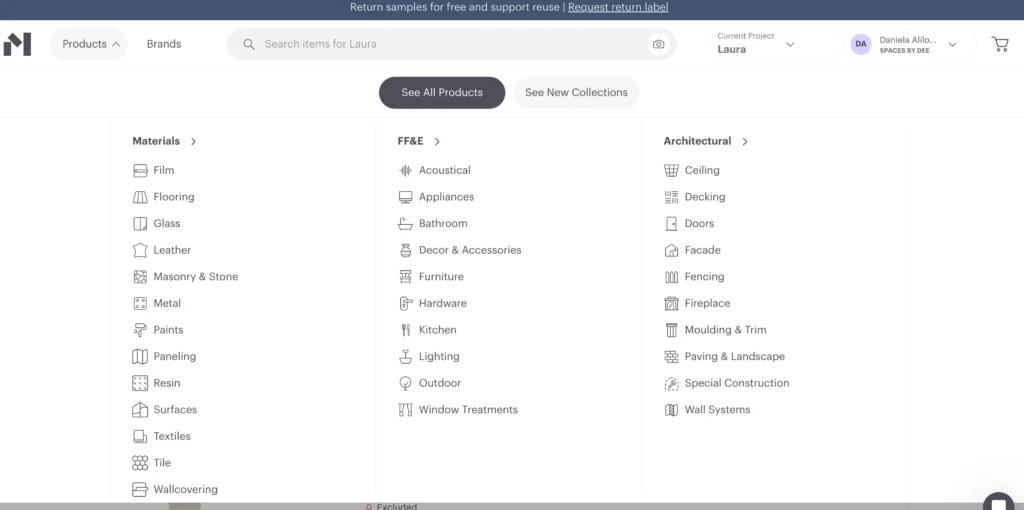
The appeal of Material Bank is pretty obvious.
It’s essentially a one-stop online sourcing platform where interior designers can browse products from hundreds of different manufacturers, order samples, and connect directly with vendors—all from one place.
Having spent years sourcing the traditional way, I can certainly appreciate the convenience.
Before taking my design business online, I sourced projects the same way many designers still do today. If I needed tile, plumbing fixtures, wall treatments, textiles, flooring, or wallpaper, I would spend hours visiting showrooms and resource centres, flipping through endless sample books, hoping to stumble upon the perfect material that suited both my client’s vision and the project budget.
And don’t get me wrong—I genuinely enjoy sourcing in person.
Something is inspiring about walking through a beautiful showroom and discovering products you may never have found online.
However, it’s not always the most convenient process, and it certainly isn’t the most efficient for either designers or clients.
Material Bank offers an impressive selection of products, including tile, wall panelling, wallpaper, paint swatches, plumbing fixtures, textiles, flooring, and much more. Essentially, everything you would need for both FF&E and architectural finish selections can be sourced through the platform and shipped throughout both Canada and the United States.
I was honestly impressed by just how extensive their product catalogue is.
Perhaps the most impressive feature, though, is that once your trade account has been approved, you’re eligible to order material samples completely free of charge.
For interior designers who regularly specify products across multiple projects, that can represent a significant savings—not only in sample costs, but also in the amount of time spent sourcing.
The Sample Ordering Process
At the time of writing this, I’m working on several bathroom renovation projects for clients in the San Francisco area while I’m based in Toronto. In another era, this would have posed a major challenge, but today, I’m able to work with clients across different countries while still providing a thoughtful, tactile design experience.
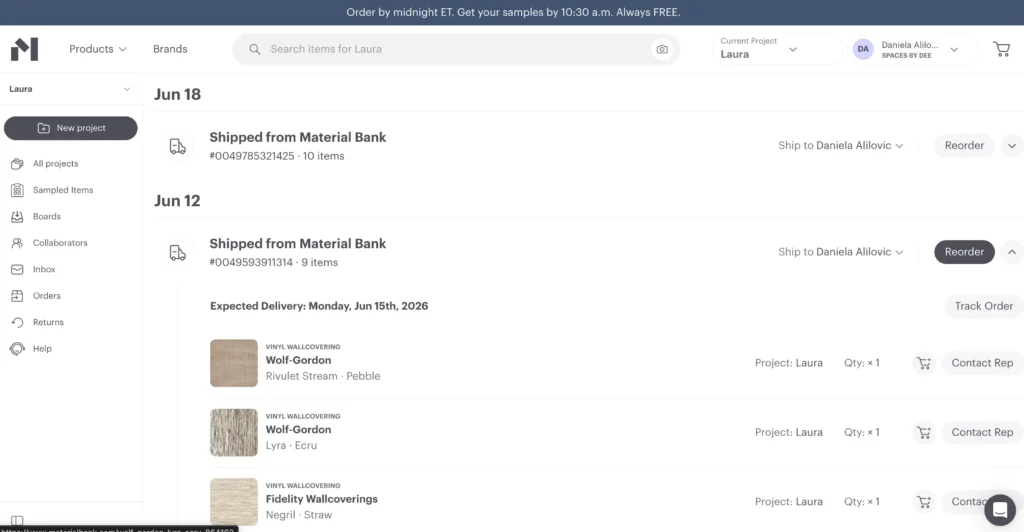
To get started, I created a new project in Material Bank and, admittedly, went a little crazy adding samples to my cart. Since I was designing three different bathrooms, each with its own design scheme, I ordered a wide variety of tile samples, along with paint swatches, wallpaper, and other finishes I wanted my clients to review.
Shipping Lead Times
Once my order was submitted, I received a confirmation showing that it had been split into two shipments. One portion of the order was scheduled to ship within a few days, while the remaining samples had a lead time of approximately 5–7 days, depending on the vendor.
This is something to be mindful of.
In the interior design industry, timing is everything. Because Material Bank works with hundreds of different manufacturers, your samples won’t always arrive at the same time. Delays can happen, and as with any shipment, there is always the possibility of packages arriving later than expected or even getting lost in transit.
In this regard, traditional sourcing still has a slight advantage. If you’re working on a tight deadline, you can always drive to a local showroom and pick up samples the very same day.
That said, for my particular project, waiting a few extra days wasn’t an issue. My clients live just outside of San Francisco and have a toddler at home, so they actually appreciated not having to spend an afternoon driving from showroom to showroom.
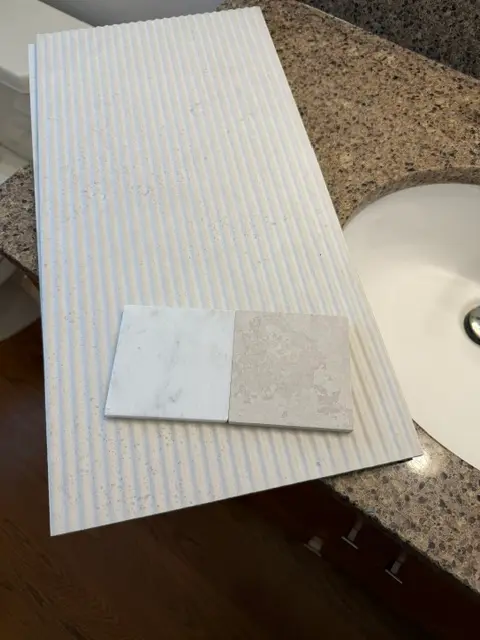
As the sample boxes started arriving, it became quite an exciting experience for them. We scheduled a video call and went through each sample together, comparing materials and reviewing how they worked with the overall design concept.
Some Tile Samples Did Not Make The Cut…
One thing that quickly became apparent was just how important it is to see materials in person.
Some of the samples looked almost identical to their online photos, while others were completely different.
For example, I had ordered a beautiful green accent tile that appeared to be a soft sage colour online. When it arrived, however, it was… well… what my client lovingly described as a “puke green.”
Needless to say, that one didn’t make the cut.
Thankfully, many of the other samples exceeded our expectations, and seeing everything in person allowed my client to truly envision how the bathrooms would come together. It’s one thing to see a rendering or mood board, but physically holding the materials makes the design feel much more real.
After reviewing everything together, we finalized several of our selections and were ready to move forward with ordering.
Ordering Products Through Material Bank
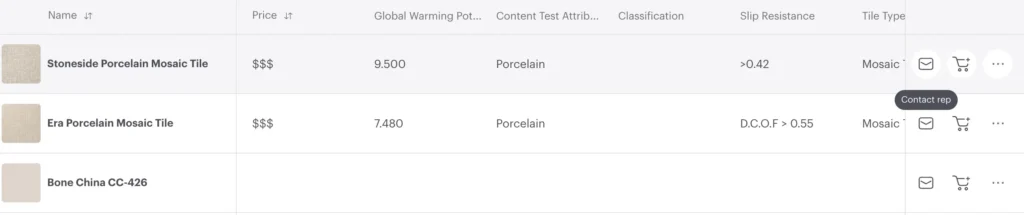
Once my client had approved the selections, I went back into my Material Bank account, selected the products we wanted to move forward with, and contacted the manufacturer’s representatives directly to request pricing and place purchase orders.
Overall, this part of the process was fairly straightforward.
For some vendors, the experience was excellent. Their representatives responded quickly, provided pricing promptly, and the ordering process was seamless.
Other vendors, however, took several days—or even a couple of weeks—to respond to my inquiries or provide pricing.
To be fair, this isn’t entirely uncommon in the interior design industry when requesting quotes or purchase orders. However, as designers know, time is often of the essence, especially when coordinating renovation schedules and product lead times.
It’s also worth noting that once you move beyond the sampling stage, Material Bank steps out of the transaction. From that point onward, you’re working directly with the manufacturer’s representative, who handles pricing, ordering, invoicing, and fulfillment.
Essentially, Material Bank serves as the bridge that makes discovering products and obtaining samples incredibly convenient while connecting you with the correct sales representative to complete your order.
Would I Recommend Material Bank?
So, would I recommend Material Bank to other interior designers?
Yes, with a few things to keep in mind.
First, don’t rely solely on the product photos. As I experienced firsthand, some materials look quite different in person than they do online, which only reinforces why ordering physical samples is so important.
Second, remember that shipping times can vary. Since products come from different vendors, samples may arrive separately, and occasionally there can be delays.
Finally, once you’re ready to purchase products, your experience will largely depend on the responsiveness of each individual vendor’s representative. Some are incredibly quick and efficient, while others may require a bit more patience.
Overall, though, I genuinely enjoyed using this resource.
The platform made it possible for me to source materials, collaborate remotely with clients in another country, and even coordinate procurement on their behalf.
To me, that’s exactly where the future of interior design is headed, and it’s a future I’m excited to be a part of.
Click Here To Shop My Favourite Home Goods
Let’s design your space together, virtually.