Why I Built a Virtual Interior Design Business
When I was a kid, I watched W Network instead of the kids’ channels, hoping to catch a glimpse of the glamorous world of interior design. Shows like Divine Design and Colour Confidential gave me a window into a career I could only dream about at the time. I imagined beautiful interiors, creative freedom, happy clients, and, eventually, running my own design business.
And that’s exactly what I set out to do.
In fact, I was eager. Very eager.
Straight out of design school, I began my entrepreneurial journey and started building Spaces by Dee, which operated as a boutique interior design firm in the Toronto area.

At the time, I had a pretty clear picture of what I thought success as an interior designer was supposed to look like. I envisioned working closely with local clients, designing beautiful homes, taking on increasingly ambitious renovation projects, and eventually building a full-service design-build business.
It seemed like the obvious path. You start small, gain experience, take on bigger projects, and eventually scale your business.
But what I didn’t question at the time was whether that particular version of growth was actually right for me.
Read more on My Story.
The Reality of Running a Traditional Interior Design Business
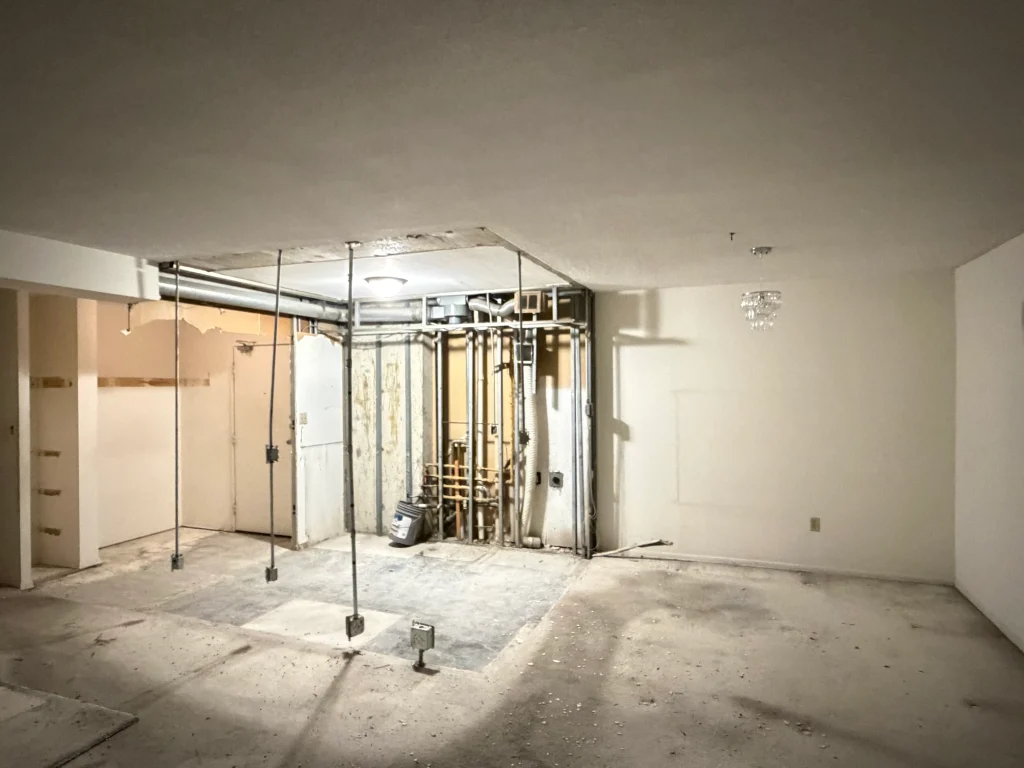
In the early stages of my career, I worked as a kitchen and bath designer in a Toronto showroom while building my own business and learning under the guidance of other interior designers.
There was a lot to learn, and I learned much of it through experience, trial and error, and figuring things out as I went. Gradually, I started getting the wheels turning in my own business and taking on more substantial projects.
But as my projects grew in size and complexity, so did the challenges.
The larger the renovation, the more moving parts there were to manage. Suddenly, the work wasn’t just about selecting materials, developing layouts, sourcing furniture, or creating a beautiful space. It was also about coordinating trades, managing schedules, chasing deliveries, resolving construction issues, and navigating the expectations and frustrations that inevitably came with the process.
I hadn’t fully anticipated just how much of my time and energy would be consumed by these responsibilities.
I had a somewhat romanticized idea of what running an interior design business would look like. I imagined spending my days immersed in the creative process, bringing ideas to life, and collaborating with clients to create spaces that felt uniquely theirs.
Instead, I increasingly found myself managing the logistics surrounding the design.
And that distinction mattered more than I initially realized.
When the Designer Becomes the Project Manager
Renovations are complicated. Anyone who has worked in residential construction knows that even the most carefully planned project can encounter unexpected delays, miscommunications, material shortages, and scheduling conflicts.
I understand that these challenges are part of the industry. I also have a great deal of respect for designers who successfully manage full-service projects and genuinely enjoy bringing all those moving parts together.
But I began to realize that I didn’t necessarily want that to be the centre of my own business.
I found myself dealing with trade coordination issues, trying to keep projects on schedule, and spending time resolving problems that had little to do with the actual design. Furniture deliveries would be delayed, sometimes repeatedly. Trades wouldn’t always meet expectations or timelines. And when something went wrong, I often became the person clients turned to for answers (and to let their anger out on), even when the issue was outside my direct control.
It could feel like being caught between everyone involved in a project.
Clients understandably wanted their homes completed as promised. Trades had their own schedules and challenges. Vendors had their own backorders and delivery complications. And I was expected to keep everything moving while maintaining the client relationship.
The pressure was real.
I tried my best to become better at managing these situations. I worked to improve my processes, understand the construction side of the business, and develop the skills needed to coordinate increasingly complex projects.
But over time, I began asking myself a question that I couldn’t ignore:
Was this really what I wanted to spend my career doing?
I hadn’t gone into interior design because I wanted to spend my days chasing people for updates, managing schedules, or absorbing the frustration that came with delays I couldn’t always prevent.
I wanted to design.
I wanted to work through creative challenges, explore materials and finishes, develop concepts, and help people see the potential in their spaces.
Yet the creative part of my role sometimes felt like a surprisingly small piece of the overall picture.
I wasn’t necessarily struggling because I couldn’t handle the work. I was questioning whether I wanted to build a business around work that drained me.
And that was an important distinction.
I Tried to Make the Traditional Model Work
Rather than immediately abandoning the model I had envisioned, I tried to get better at it.
I leaned into the project-management side of my work and pursued my Project Management Professional (PMP) certification. I wanted to strengthen my understanding of scheduling, risk management, communication, and the many moving parts involved in delivering complex projects.
I thought that perhaps if I became more organized, more knowledgeable, and more effective at managing people and processes, I could overcome the challenges I was experiencing.
And those skills have absolutely been valuable. My project-management background continues to inform the way I approach design, organize information, and develop workflows.
But improving my ability to manage a business model didn’t necessarily mean that model was the right fit for me.
Even when I put considerable effort into coordinating projects and resolving problems, I still felt that too much of my time was being spent on responsibilities that weren’t central to why I had become a designer in the first place.
I also started thinking about what growth would look like if I continued down that path.
If larger projects meant more trades, more coordination, more potential points of failure, and more responsibility for things outside my control, was taking on increasingly complex renovations really the only way to grow?
The idea of scaling started to look less appealing when I considered what it might actually require from me.
I didn’t want to build a business that demanded more of the very things I was trying to move away from.
I needed to rethink the entire model.
Discovering a Different Way to Offer Interior Design
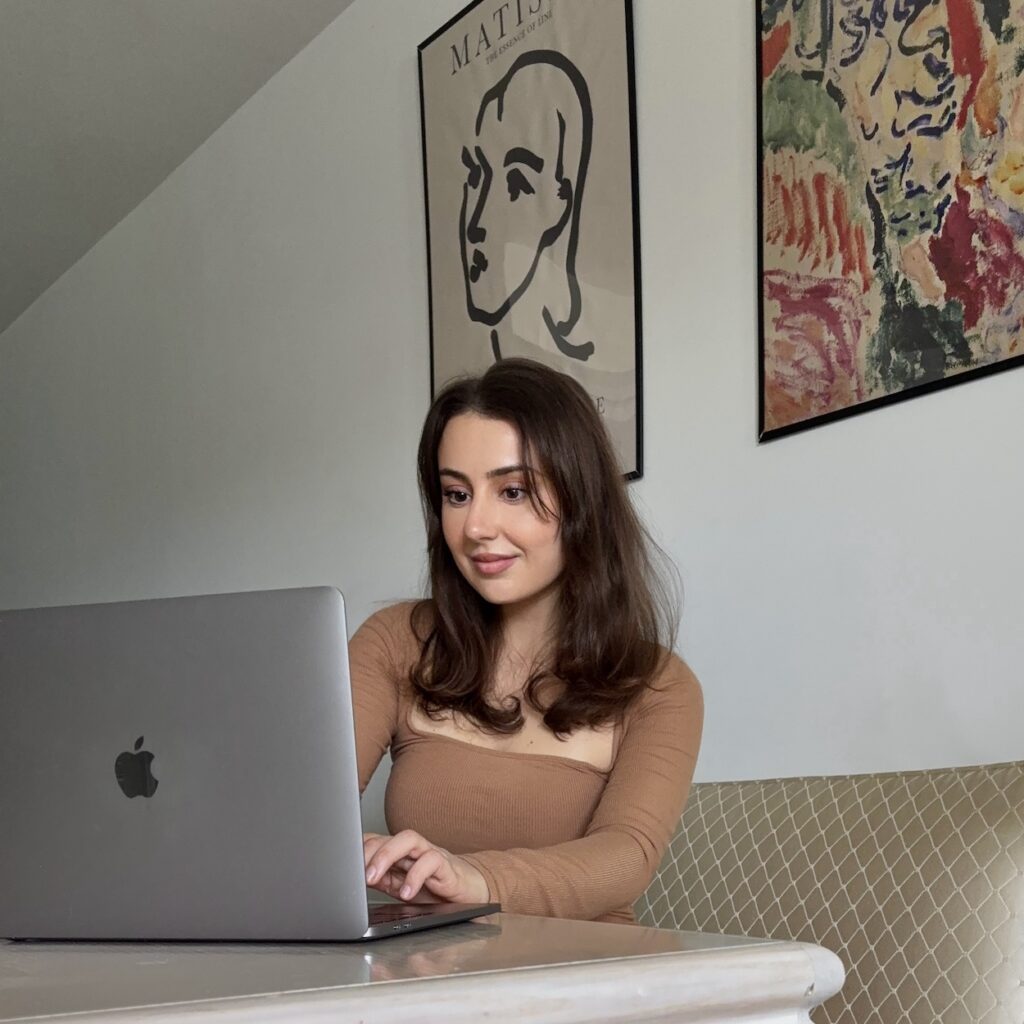
This was when I started looking more seriously at virtual interior design.
Of course, virtual design wasn’t a new concept. Havenly and Decorilla had already demonstrated that interior design services could be delivered online, and the industry was beginning to explore different ways of connecting designers with clients.
But I started to see virtual design as more than just another service offering. It presented an opportunity to rethink how I structured my business altogether.
What if I could offer clients professional design guidance, creative direction, space planning, sourcing, and visualizations without taking responsibility for managing every aspect of a physical renovation?
What if I could focus on the parts of the process I enjoyed most while allowing clients to implement the design themselves, work with their own contractors, or move forward at their own pace?
And what if my business wasn’t limited to clients within driving distance of Toronto?
These questions opened up an entirely different way of thinking about my career.
Virtual interior design allowed me to separate the design process from the hands-on project delivery model I had been accustomed to.
Instead of needing to be physically present throughout a renovation, I could work with clients remotely, develop design concepts, create floor plans and mockups, source furniture and materials, and help clients visualize what their spaces could become.
The scope of my involvement could be defined by the service itself, rather than automatically extending into every aspect of implementation.
That distinction was liberating.
I could still provide meaningful design expertise without necessarily becoming the person responsible for coordinating every trade, managing every delivery, and troubleshooting every construction issue.
It wasn’t about removing all the challenges from interior design. It was about choosing which challenges I wanted my business to take on.
Building a Business Around the Work I Actually Enjoy
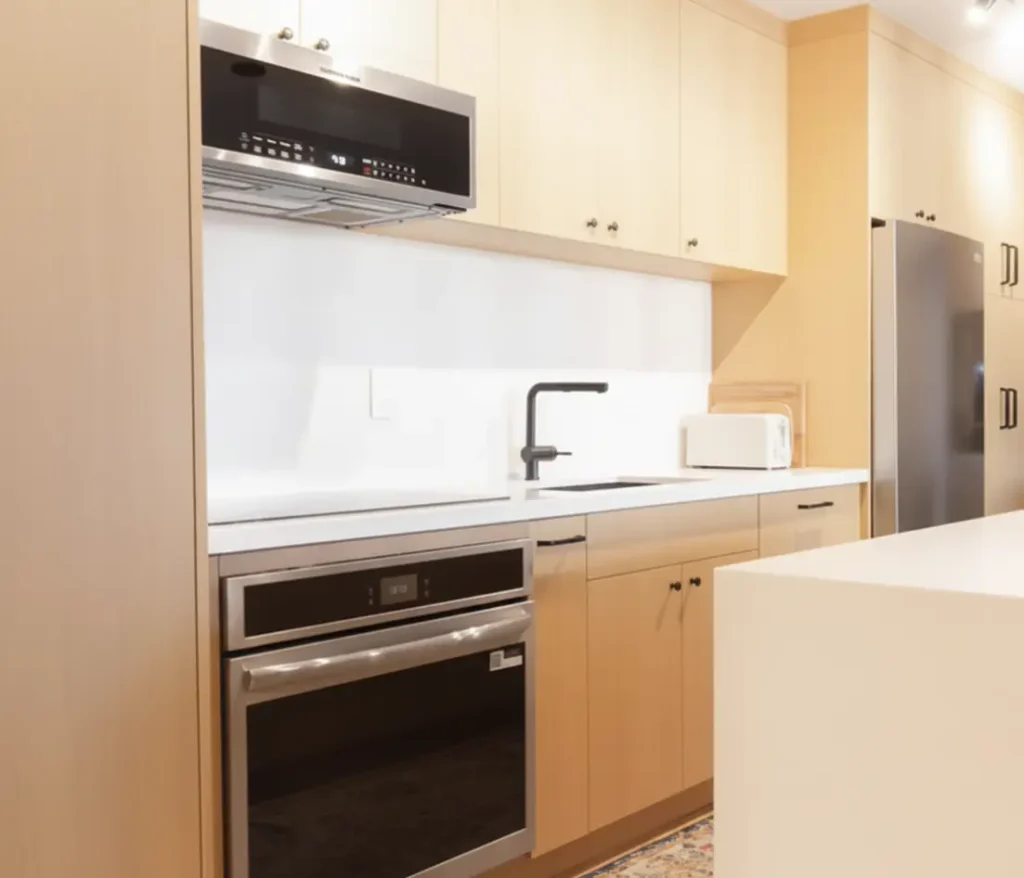
The more I explored virtual design, the more I realized that I could build a business around my strengths rather than trying to fit myself into a conventional business model.
I enjoy connecting with clients, understanding their needs, solving spatial and aesthetic challenges, developing concepts, and finding creative ways to bring a vision together.
I also enjoy the technical side of design: experimenting with software, creating visualizations, exploring new tools, and finding better ways to communicate ideas.
Virtual design gave me room to bring these interests together.
It also opened up opportunities to work with clients beyond my immediate geographic area. Rather than relying entirely on local referrals and competing for projects within the Toronto market, I could reach people who were looking for design expertise regardless of where they lived.
That didn’t mean I suddenly had a business that ran itself. I still had to learn how to market my services online, communicate the value of a virtual design experience, establish clear deliverables, and help clients understand how the process worked.
I had to rethink how I presented my services, how I attracted the right clients, and how I delivered an experience that felt personal despite not always meeting clients in person.
But these were challenges I was much more interested in solving.
I was building something that felt aligned with the way I wanted to work, the skills I wanted to develop, and the life I wanted to create for myself.
And that became a much more meaningful definition of growth.
Virtual Interior Design Isn’t The Easy Way Out
I want to make one thing clear: choosing virtual design wasn’t about deciding that traditional interior design was wrong or that managing renovations wasn’t worthwhile.
Full-service interior design serves an important purpose. There are designers who excel at managing complex renovations, coordinating trades, and overseeing projects from the initial concept through to completion. For the right person, that can be an incredibly rewarding business model.
It simply wasn’t the model I wanted to build my future around.
Virtual design also comes with its own challenges. You need clear communication, well-defined deliverables, effective digital tools, and a process that helps clients translate a design concept into a real space. You have to learn how to communicate ideas without always being physically present, and you need to establish boundaries around what is and isn’t included in your services.
Clients may still encounter contractor issues, product delays, or unexpected construction problems. The difference is that a virtual design service can be structured so that managing those issues isn’t automatically your responsibility.
The key is understanding what you’re offering, setting expectations, and building a service model that works for both you and your clients.
For me, that meant moving toward a more focused, design-centred business.
I could offer expertise and guidance while giving clients the flexibility to implement their projects in a way that suited their circumstances.
It was a different approach, but it was one that made much more sense for me.
How Technology Helped Me Redefine my Business
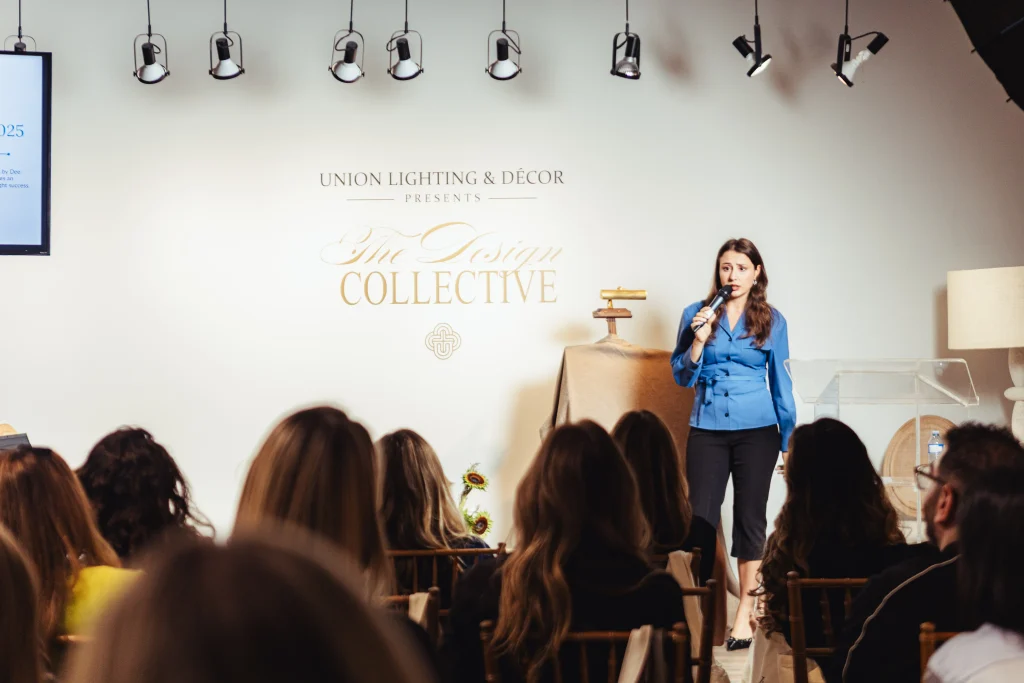
My transition into virtual interior design also sparked a deeper interest in the technology shaping our industry.
When you remove some of the traditional, hands-on elements of a service, you have to think more carefully about how the experience is delivered. How do you help clients understand a layout without standing in the room together? How do you communicate finishes, proportions, and furniture selections remotely? How do you create a process that feels organized, professional, and easy to navigate?
These questions pushed me to explore the digital tools available to interior designers, from design software and 3D visualization to online client portals and emerging AI-powered applications.
Technology became more than a way to produce drawings or images. It became part of the infrastructure of my business.
The right tools could help me communicate ideas more effectively, streamline repetitive tasks, improve the client experience, and deliver design services in ways that weren’t as dependent on my physical presence.
That interest eventually became a significant part of my work and the reason I began sharing my experiences with design technology through this blog.
I’m particularly interested in how new tools, including AI, can support designers rather than replace the expertise they bring to a project. Technology can help us work differently, but good design still requires judgment, creativity, context, and an understanding of how people actually live.
For me, exploring these tools is part of a larger question: how can we rethink the way interior design services are delivered, both for the benefit of our clients and for the designers running the businesses behind them?
Your Interior Design Business Doesn’t Have to Look Like Everyone Else’s
Looking back, I think one of the biggest lessons from this transition is that we can become so focused on following an established path that we forget to question whether it actually suits us.
When I started my business, I assumed that growth meant taking on larger projects, offering more comprehensive services, and eventually managing increasingly complex renovations.
That was the version of success I had absorbed from the industry around me.
But there are many ways to build a successful interior design business.
You might want to specialize in kitchens and bathrooms. You might love full-service renovations and the challenge of coordinating an entire project. You might prefer consultations, e-design packages, furniture sourcing, styling, or working with clients who need help making decisions rather than managing an entire renovation.
You might even discover that the most rewarding part of your work is developing digital products, teaching other designers, or exploring the technology changing our industry.
None of these paths is inherently better than another.
The important thing is to understand what kind of work energizes you, what kind drains you, and what you want your business to make possible in your life.
For me, that meant creating a business with greater location independence, more room for creative work, and less reliance on managing the entire renovation process from beginning to end.
It meant redefining what being an interior designer could look like for me.
And it meant giving myself permission to build something different.
What’s Next?

My journey from a traditional, renovation-focused interior design practice toward virtual design wasn’t an overnight transformation. It involved experimentation, learning new skills, rethinking my services, and finding my place within an industry that continues to evolve.
Today, Spaces by Dee reflects that evolution. My work brings together interior design, digital workflows, and an ongoing exploration of the tools and technologies that are changing how designers work and serve their clients.
I’m still passionate about creating beautiful, functional spaces. That part hasn’t changed since I was the kid watching design shows on W Network.
What has changed is how I choose to deliver that expertise, how I approach running a business, and how I define success as an entrepreneur.
I’m interested in building a practice that can evolve alongside the industry rather than being tied to one traditional way of doing things.
And I believe more designers have the opportunity to do the same.
If you’re an interior designer feeling overwhelmed by the demands of running a full-service business, or if you’re simply curious about what else might be possible, I encourage you to step back and question the assumptions you’ve made about growth.
You don’t necessarily have to take on bigger renovations, hire more people, or manage more projects to move your business forward.
Perhaps virtual interior design is worth exploring. Perhaps a more specialized service model would suit you better. Or perhaps there’s an entirely different direction that you haven’t considered yet.
The point is to give yourself permission to explore those possibilities.
The interior design industry is constantly evolving, and technology is creating new ways for designers to communicate, collaborate, and deliver their expertise. We have more opportunities than ever to rethink how we work.
You don’t have to follow a predetermined path just because it’s the one you’ve always seen.
You can build a business around your strengths, your interests, and the life you want to live.
And if you’re ready to explore what building a virtual interior design business could look like, I’ve put together an e-guide to help you get started. Explore the e-guide here.
Click Here To Shop My Favourite Home Goods
Let’s design your space together, virtually.