This White Oak Kitchen Design Turned Out Better Than Expected
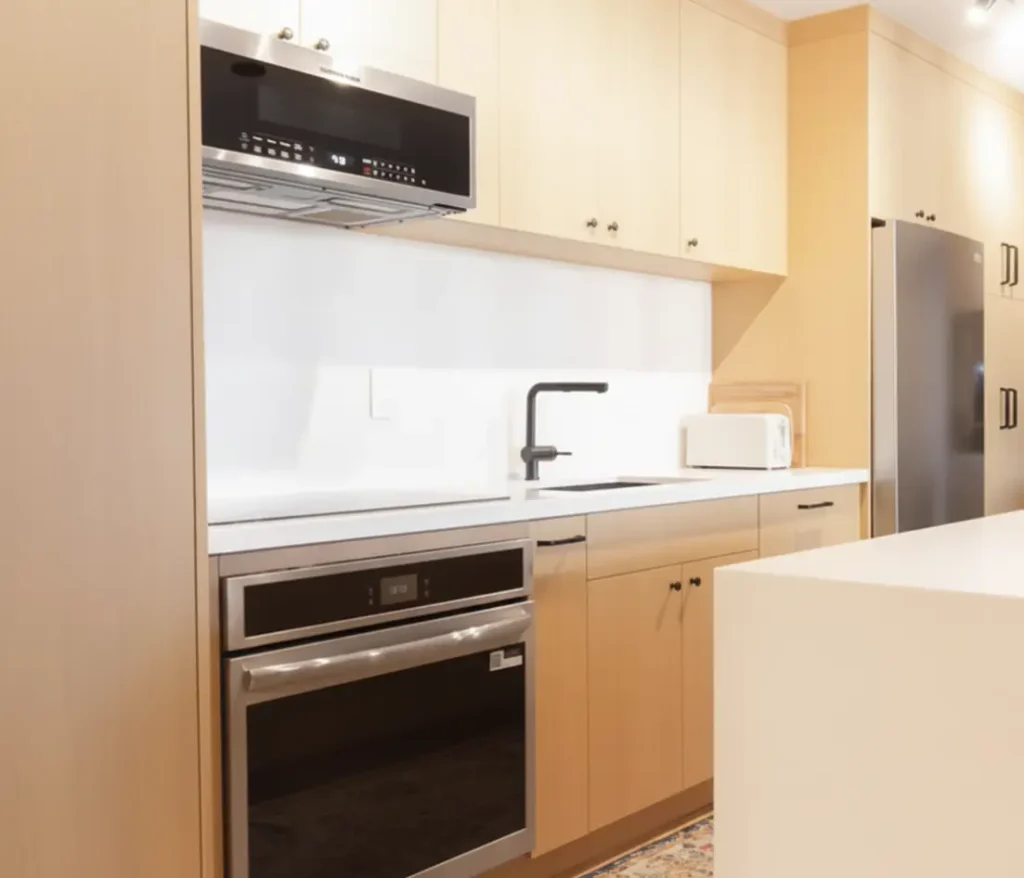
Last year, my clients called me to redesign their dated apartment, which had plenty of potential. My client described her style as “spa-like” and minimal, and told me she wanted a white oak kitchen. She was even open to a two-toned kitchen and wanted to introduce some taupe into the mix. This project certainly intrigued me, and I was excited to jump in and play with different materials and finishes to create a standout white oak kitchen combination.
Keep reading to see how I transformed this dated kitchen into a stunning white oak kitchen with a unique combination that even surprised the cabinet maker at the reveal.
The Kitchen Design Process
Landing on the Perfect White Oak
White oak has been trending in interior design for quite some time now, and honestly, it seems like almost every project I work on these days incorporates some element of white oak.
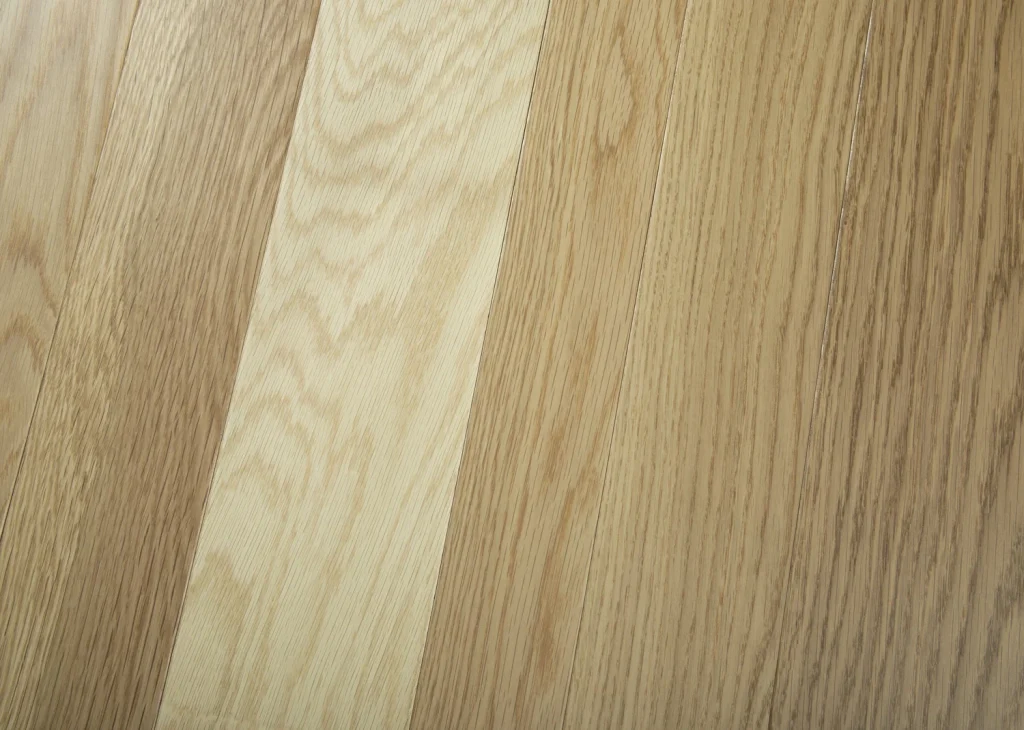
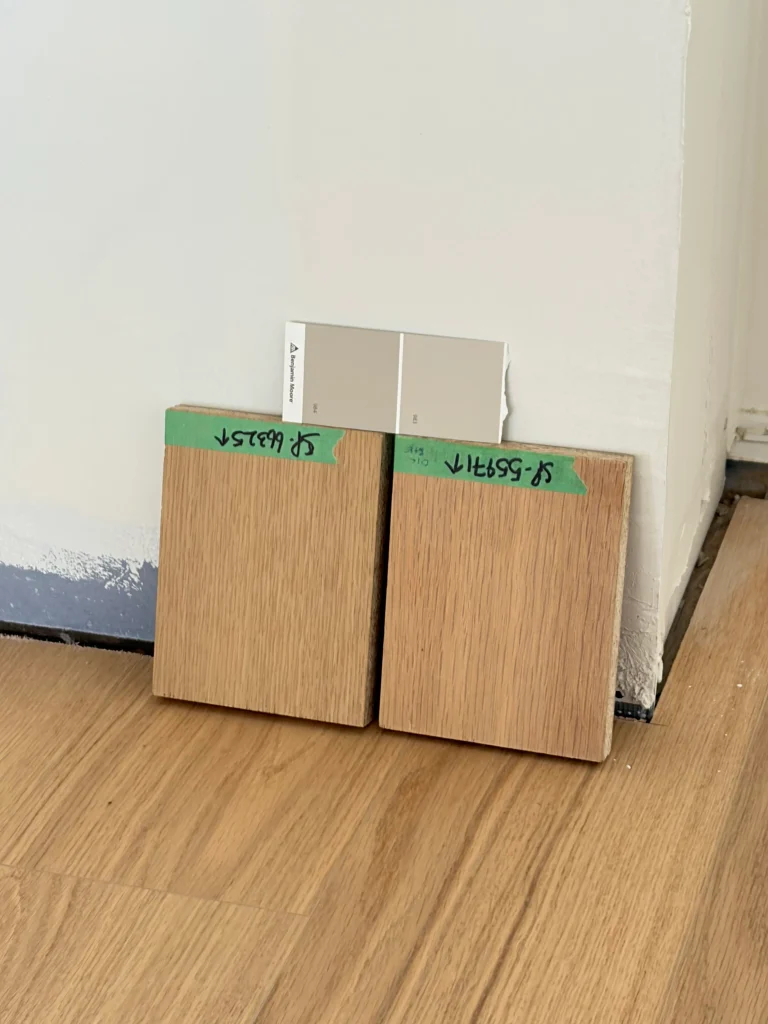
However, all white oaks are not created equal. White oak can have a variety of undertones. Some have more of a yellow hue, while others lean orange, pink, or even green.
White oak can also fall on a spectrum, from a more white-washed appearance to what I like to call a honey-toned wood.
Selecting the right white oak is an important piece of the puzzle when it comes to kitchen millwork, especially if you are also planning to introduce white oak flooring into the space.
Designer Tips for Combining White Oak Finishes
- View your samples together. Always look at your wood samples side by side before making a decision. Even more importantly, view them on-site, as lighting can dramatically change how a wood finish looks and how the different materials work together.
- Either match closely or create a clear contrast. When combining white oak cabinetry with white oak flooring, you either want to get as close as possible in terms of finish and tone so that the two look intentionally matched, or create a strong contrast with a completely different material. You don’t want the space to look like you tried to match the two finishes but ultimately missed the mark.
- Pay attention to undertones. If you’re going for a honey-toned white oak, stay within that colour family when selecting other wood finishes. The undertones don’t necessarily have to be identical, but they should feel cohesive together.
Combining Taupe with White Oak
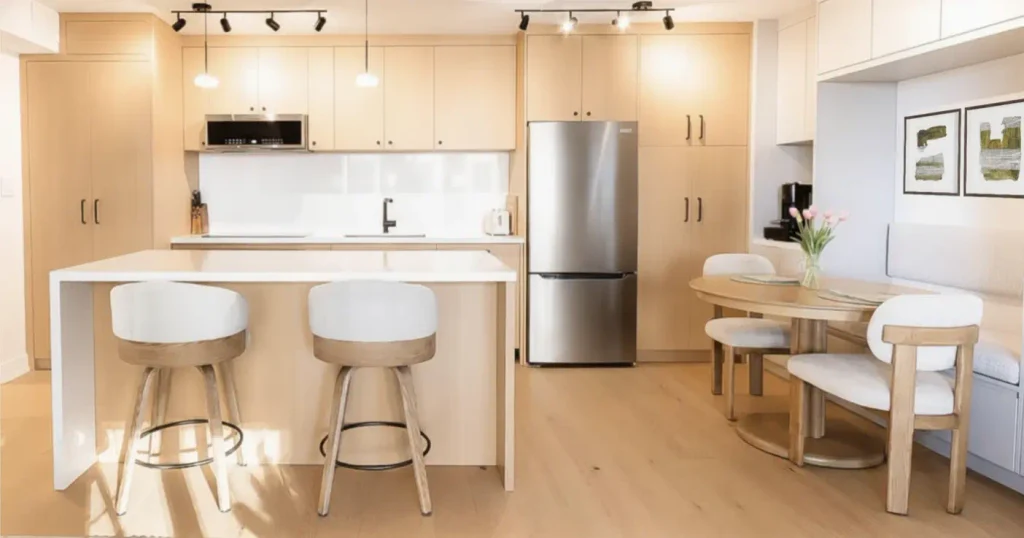
My client was open to the idea of incorporating a shade of taupe into the millwork design, which excited me, as one of the funnest parts of my job is looking through paint chips and feeling like I’m on a treasure hunt for the perfect colour.
And combining taupe with honey oak is a challenge. When it comes to taupe, there is also quite a large spectrum, as you can find taupes that are much more grey, while others lean much more brown.

Naturally, I prefer to lean toward warmer, brown-toned taupes, especially when it comes to pairing them with honey oak, which tends to have a warm undertone.
However, in this case, my client wasn’t too crazy about any of the warm taupes I presented to her.
She tended to prefer cool-toned taupes. Naturally, I was a little nervous about going too cool-toned with the taupe, fearing that the warm oak cabinetry would start to pull a little too yellow for my liking (hello, contrasting colours!).
So, I went on a little discovery and finally settled on a taupe that was not TOO warm and not TOO cool: Benjamin Moore Smokey Taupe.
Read: The Best Benjamin Moore Taupe Paint Colors
Why Chose a Two-Toned Kitchen
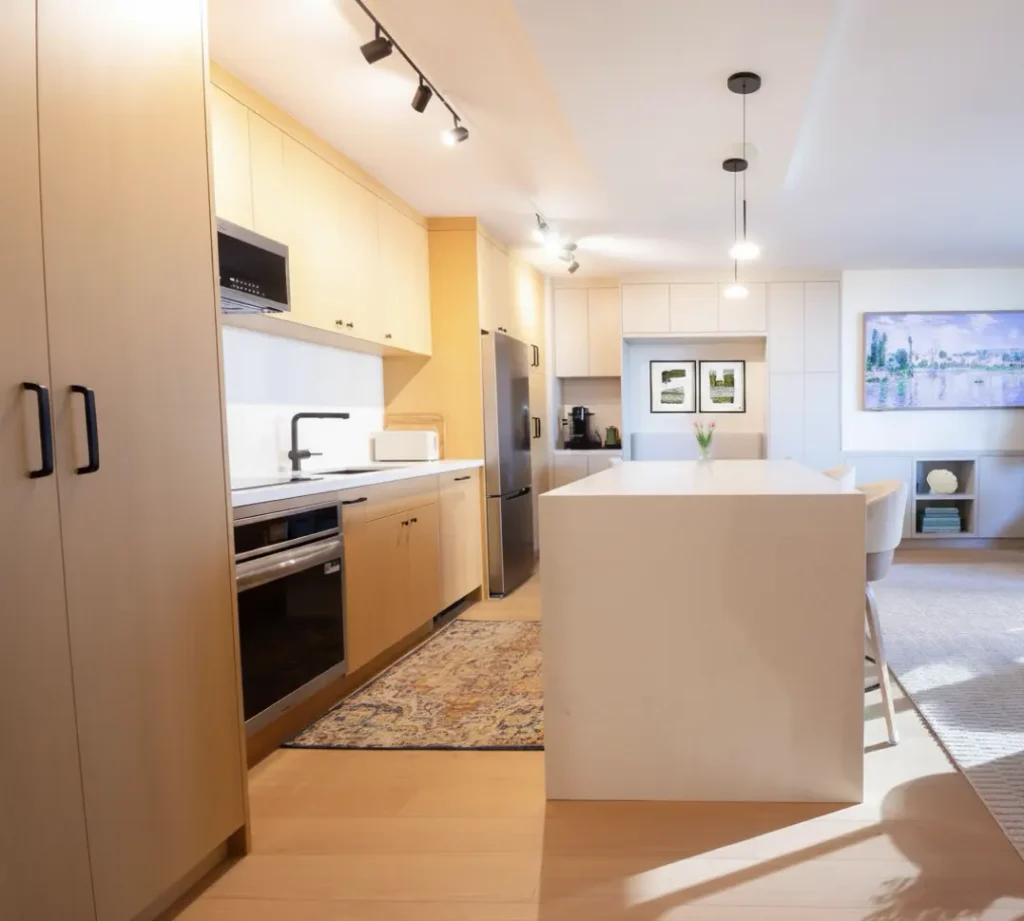
I decided to design the breakfast nook area, along with the inset media unit, to contrast against the white oak cabinetry with the taupe we settled on. My biggest concern was that using white oak for all the cabinetry and flooring could make the entire kitchen feel a little too flat or, even worse, overly matchy-matchy (I personally don’t like TOO matchy-matchy).
While I love white oak, I personally don’t gravitate toward kitchens where every wood element is the same tone…it can fall a little flat.
The breakfast nook and inset TV unit gave me the perfect opportunity to bring in that contrast without competing with the cabinetry. The goal was to create a balance between the warmth of the white oak and the taupe tones we introduced, allowing each element to stand out while still working together as one cohesive design.
And, as you can see from the results, I think the colour combination turned out fabulously, if I may say so myself! View more photos of this project.
Selecting an Accent Colour
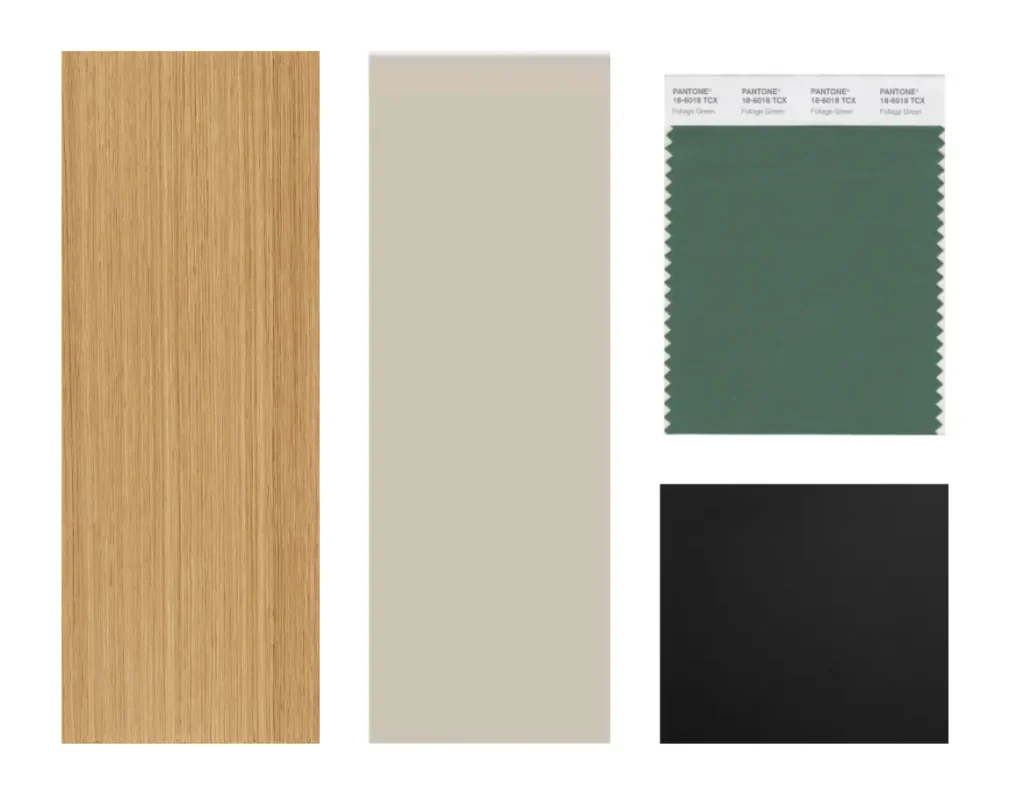
Once I settled on the combination of white oak and the perfect taupe, I knew I needed to bring some colour into the mix. When it comes to an overly neutral space, I find that people can sometimes feel hesitant to introduce colour because they don’t want to disrupt the calm, neutral feel they’ve created.
However, fear no more: green is here.
I introduced very minimal hints of green throughout the space, primarily through plants, artwork, and a few carefully selected accessories. My client did not want the green to become a dominant colour in the kitchen, but rather act as a subtle accent that added just enough visual interest and freshness.
Green works beautifully with both white oak and taupe, making it a natural choice for this design. The warmth of the oak and taupe creates a soft foundation, while the green adds a little life and contrast without taking away from the overall neutral aesthetic.
I also decided to incorporate black metal through the plumbing fixtures. Since we already had a fairly soft and warm palette, I wanted to introduce another element that would provide some depth and contrast. I personally love the contemporary feel that black fixtures bring to a kitchen, and in this space, they helped add definition and keep the overall design from feeling too soft or one-dimensional.
Why This Combination Was Pleasantly Surprising
When all was said and done in the kitchen, the cabinet maker told me he was “pleasantly surprised” with how the kitchen turned out. Naturally, I had to probe a little deeper and ask why he was surprised by the final result.
He admitted that he had actually been doubtful about the colour combination I had put together.
I laughed, because this certainly wasn’t the first time someone had questioned one of my design choices, only to be pleasantly surprised—and, might I say, completely floored—when they saw the finished result.
And honestly, I think that’s one of the fun parts of being a designer. Sometimes the combinations that feel a little unexpected on paper are the ones that end up creating the most interesting spaces. You have to be willing to take a chance, trust the process, and know how to balance the different elements so that they work together.
So, the lesson learned here? White oak and taupe—the right taupe, of course—are a fabulous combination.
Click Here To Shop My Favourite Home Goods
Let’s design your space together, virtually.