This Is How To Layout a Studio Apartment
As a designer, I know how critical layout is to a space. The right layout is at the forefront of good design. When planning a layout, you need to consider the right placement, the right scale, and how to create the best flow within a space.
In spaces such as studio apartments, layouts can be especially challenging to get right and may feel overwhelming. So, I decided to put together a guide of key considerations to help you create the perfect studio apartment layout.
AVOID COSTLY (AND UGLY) DESIGN MISTAKES
In a studio apartment, every inch counts, which means you’ll want to carefully plan out every part of the space before purchasing or placing furniture. The first step to creating a successful studio apartment layout is developing a to-scale floor plan so you can properly map out your furniture placement rather than simply winging it. In small spaces, there’s very little room for error, and one oversized piece or poorly planned layout decision can completely throw off the functionality and flow of the apartment.
Tools to Use to Create a To-Scale Floor Plan
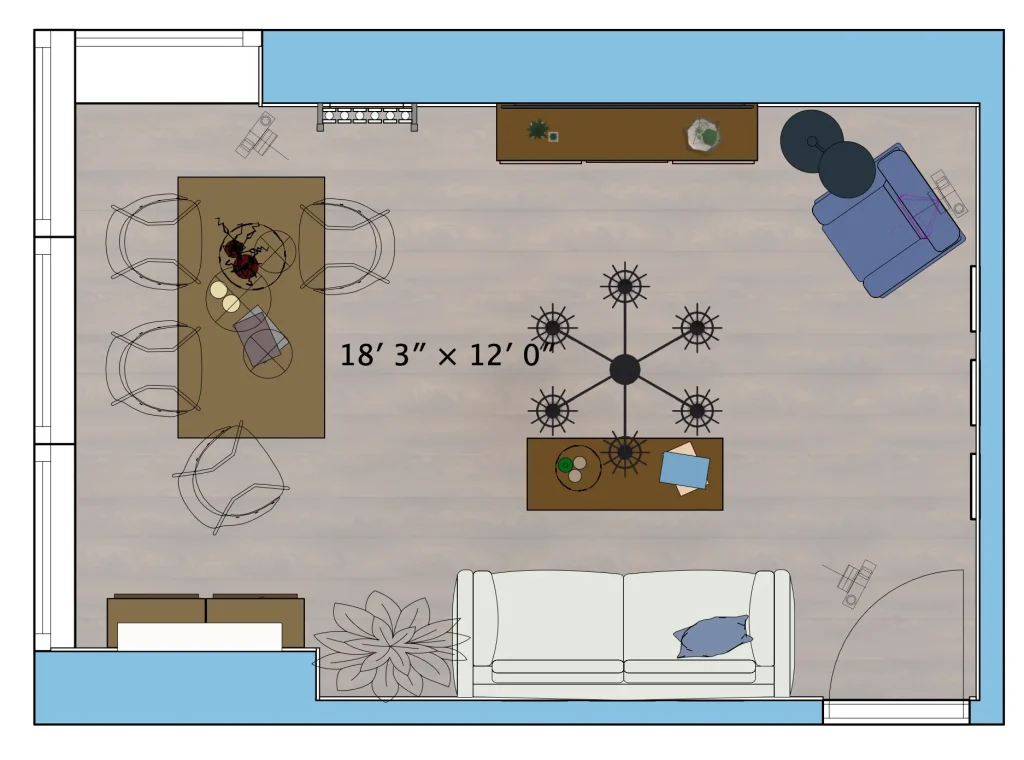
To begin, you’ll want to grab a tape measure and record all the dimensions of your space. This means measuring and sketching out each wall, along with the placement of windows, doors, radiators, columns, closets, and any other architectural details that may affect furniture placement. Even small details matter in a studio apartment.
If you’re looking for an easier and more efficient way to create a floor plan, consider using a LiDAR scanning app. These apps allow you to use your phone to scan the space and automatically generate floor plans and measurements. If you’re interested, check out my recommendation for the best LiDAR app here.
You’ll want to use a floor-planning software to transfer your measurements into a digital layout that allows you to properly space plan and visualize how furniture will fit within the space.
How to begin your space planning
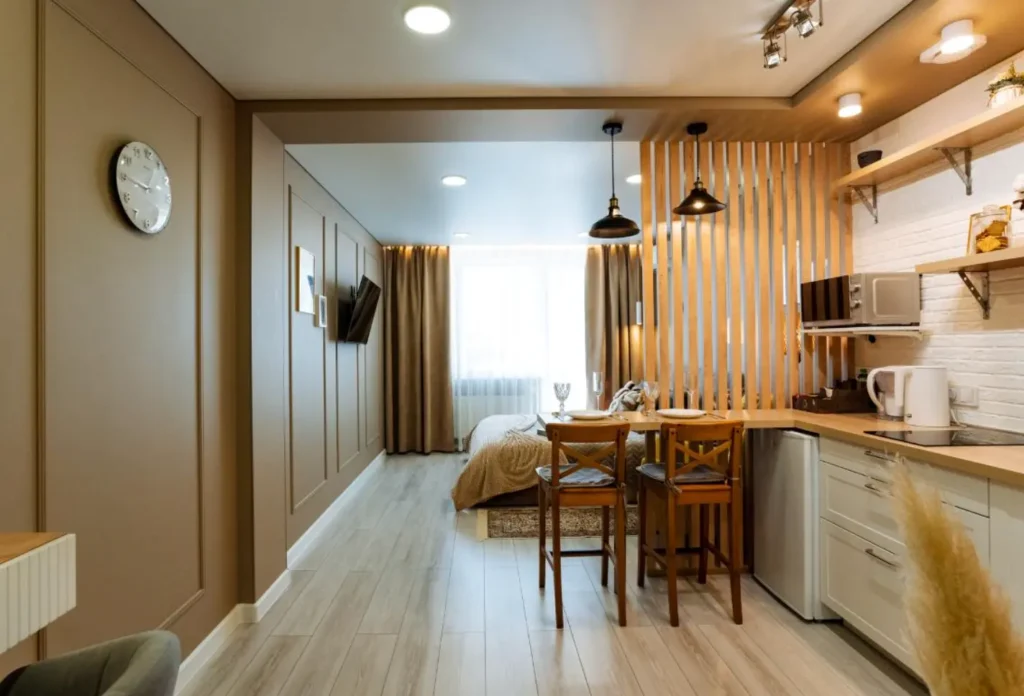
Start by placing the largest and most important pieces in the space first. In a studio apartment, this typically means the bed and sofa. Ask yourself practical questions, such as: Where does the sofa fit best without blocking circulation? What size sofa makes the most sense? Would a compact apartment sofa around 75-80″ work best? Where can the bed go while still allowing the space to feel open and functional?
This stage is where scale becomes incredibly important. Choosing the right-sized furniture can make or break a studio apartment layout. If your studio is especially compact, you may want to consider alternative solutions such as:
- A smaller bed size
- A daybed with an adjusted orientation
- A Murphy bed
- A sleeper sofa that combines both the bed and seating area into one multifunctional piece
In small-space living, flexibility and multifunctionality are key. The goal is to create a layout that feels spacious, functional, and intentional without overcrowding the room.
Design Features to Consider in Your Studio Apartment
When it comes to studio apartments, it’s all about being clever with how you lay out, divide, and maximize the space. Since every area needs to serve multiple purposes, thoughtful design decisions become essential to creating a home that feels functional, comfortable, and visually cohesive.
Here are some space-planning and design ideas that can completely transform your studio apartment layout:
Decorative Room Divider
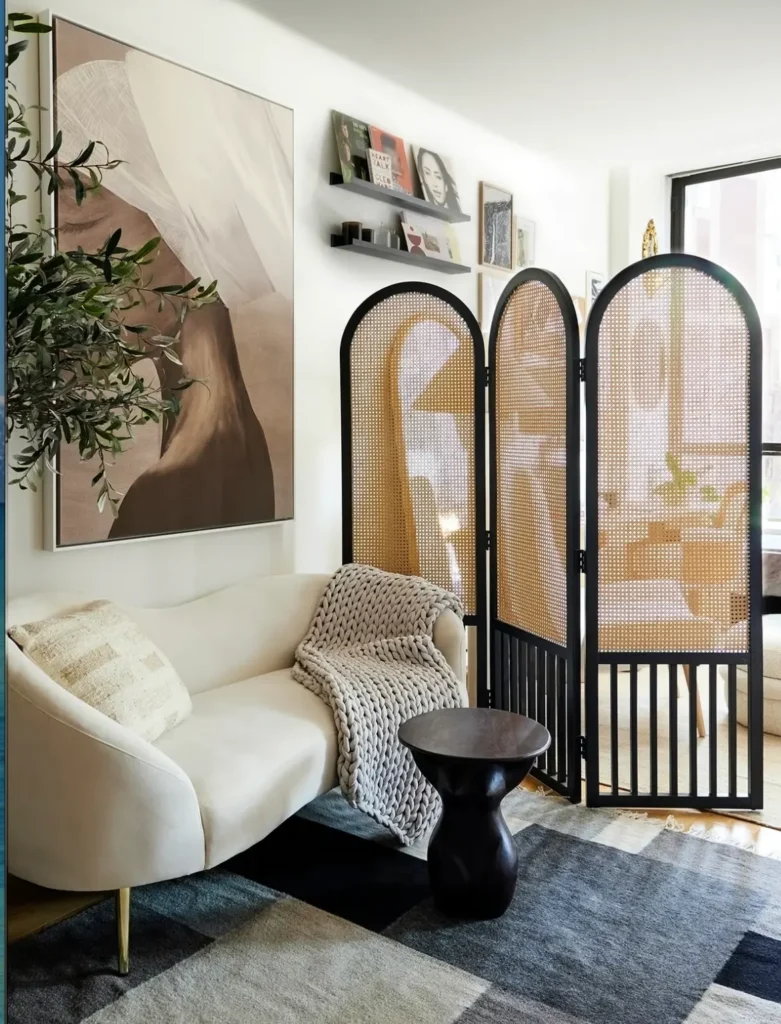
Open-concept layouts are great, but sometimes a studio apartment can feel a little too open, especially when there’s no separation between the living area and sleeping space. This is where a decorative room divider can make a huge difference.
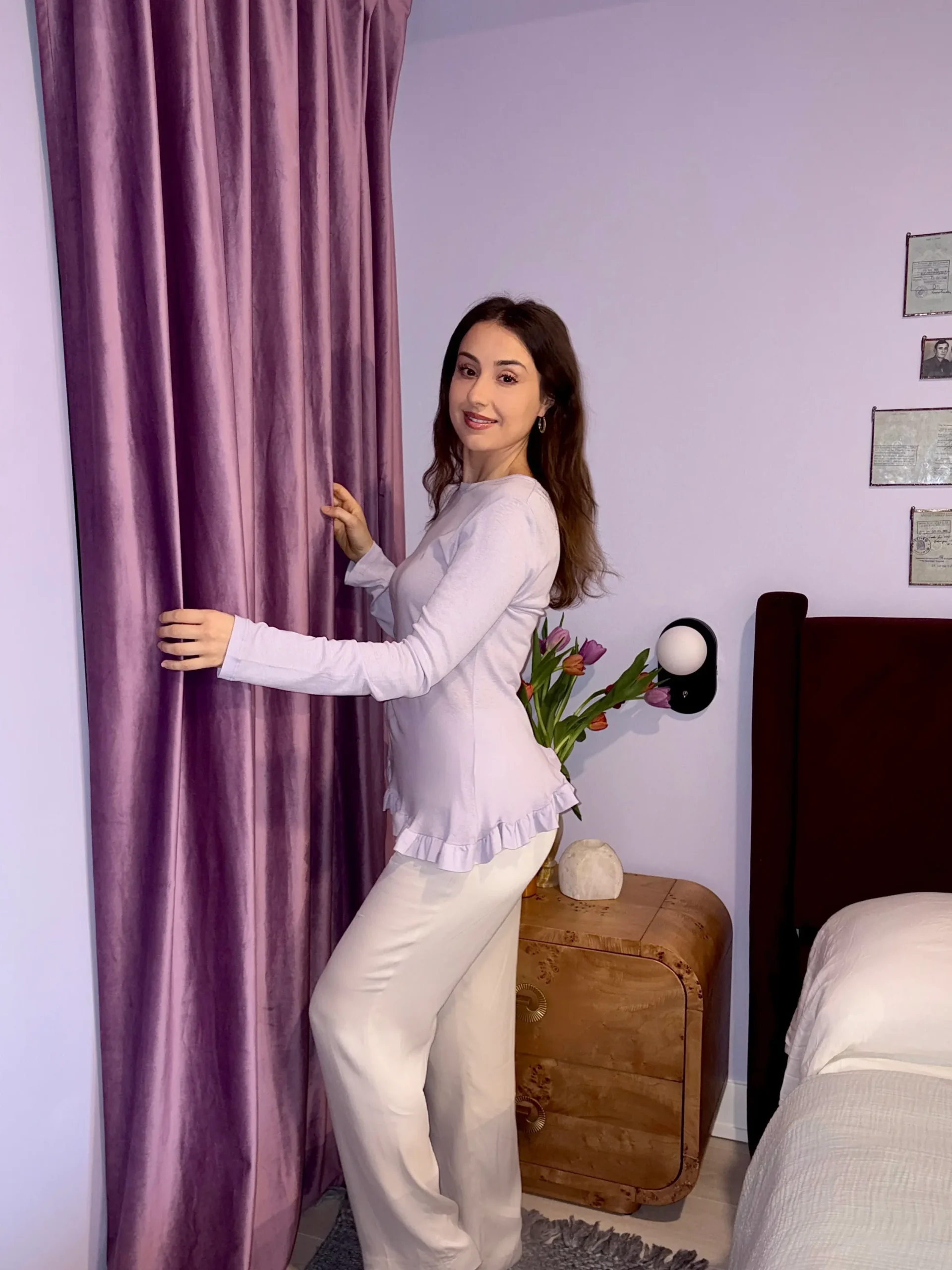
A room divider helps create a sense of privacy while also adding visual interest and dimension to the space. Whether it’s a slatted wood divider, shelving unit, curtain, folding screen, or glass partition, this feature can become a beautiful design element that enhances the apartment’s overall aesthetic while subtly defining separate zones.
Consider a Loft Bed
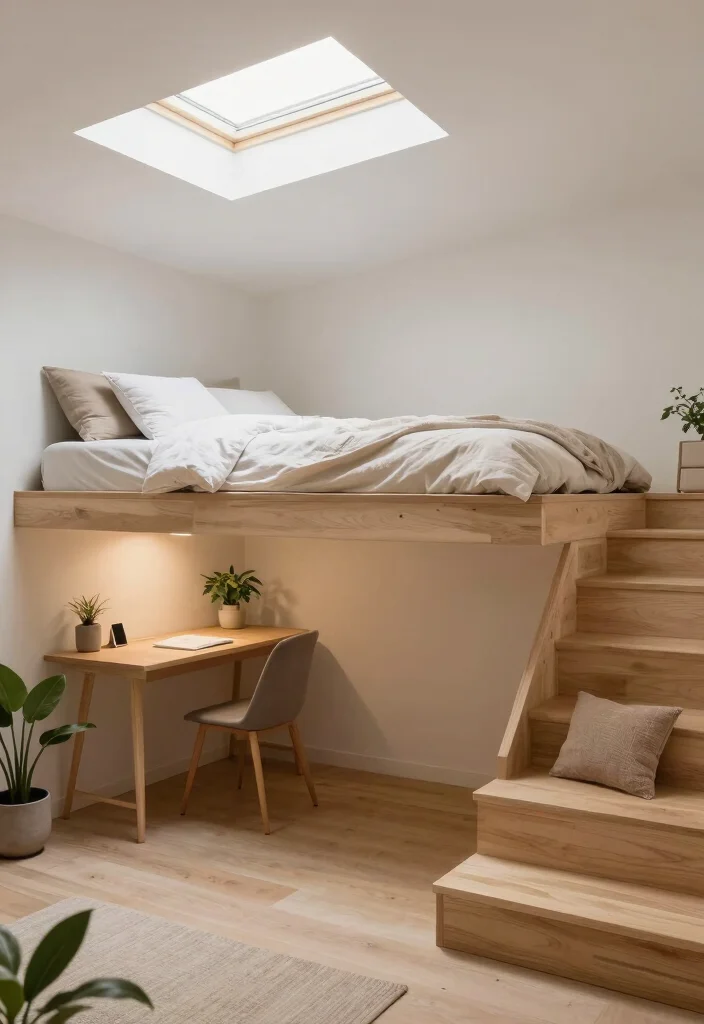
If your studio apartment has tall ceilings, a loft bed can be an incredible way to maximize vertical space. Instead of letting all that height go unused, a loft bed uses the upper portion of the room and frees up valuable square footage below.
The space underneath can then be used for a sofa, desk, dining area, storage, or even a walk-in closet setup. Beyond functionality, loft beds also create a cool, elevated, and slightly industrial feel that can add character to the apartment.
Murphy Bed
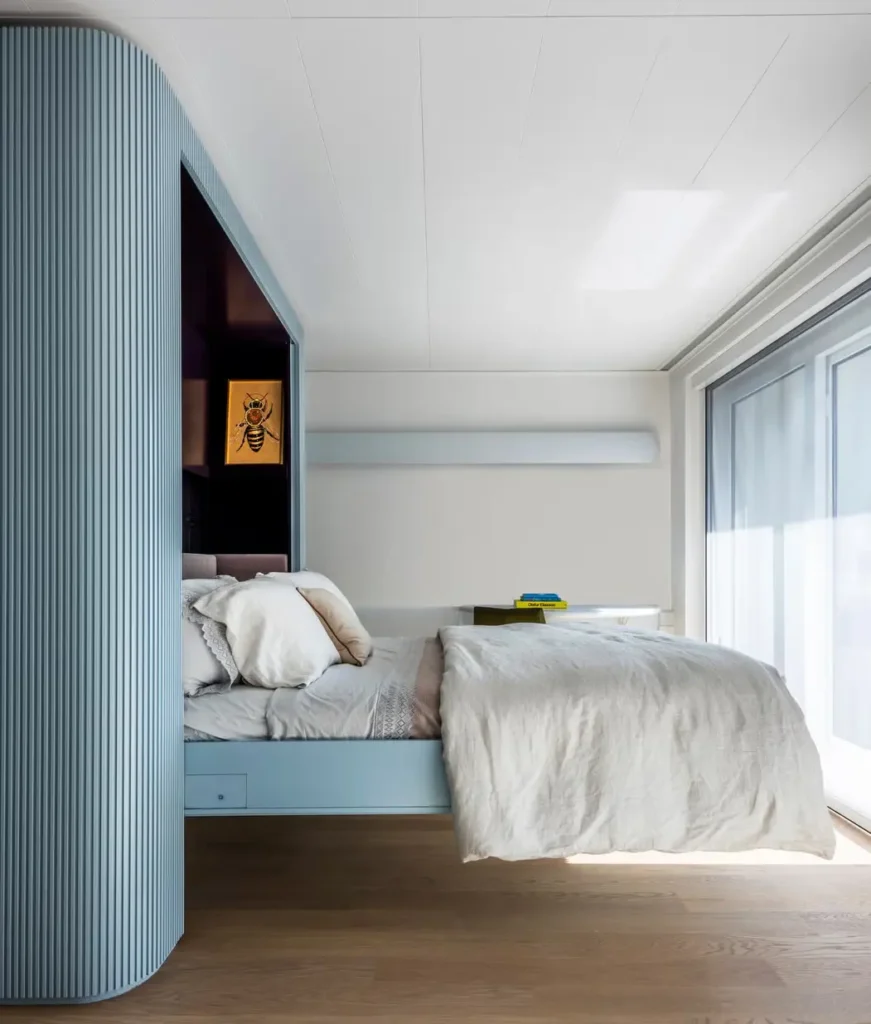
You’re probably already familiar with Murphy beds, but I had to include them because they’re truly one of the smartest studio apartment solutions. A Murphy bed allows the sleeping area to completely disappear when not in use, instantly transforming the room into a more open and multifunctional space.
I’ve recommended Murphy beds to clients several times, and they always appreciate how much more flexible and functional their apartment becomes. Instead of the bed permanently dominating the room, the space can shift and adapt throughout the day depending on how it’s being used.
Daybed
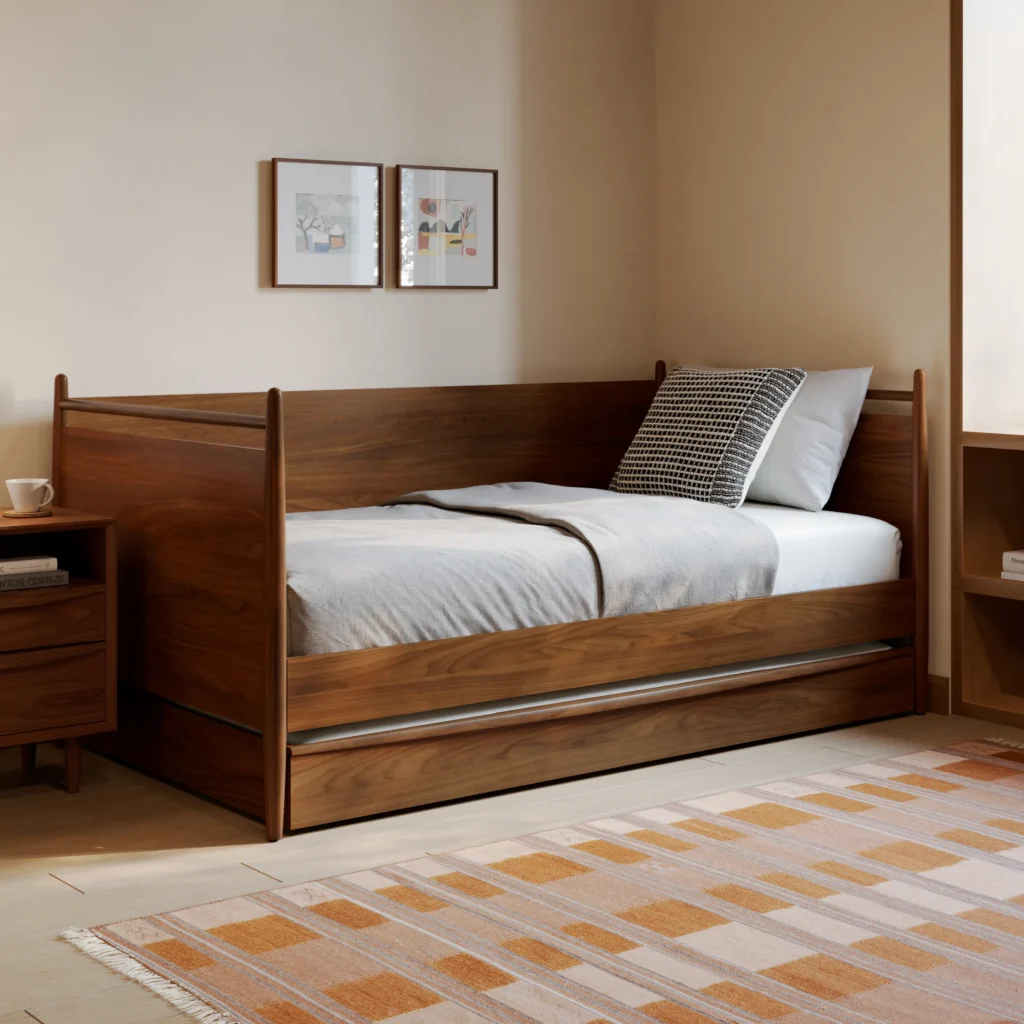
Photo Link and Link To Product
Another feature I love for studio apartments is a daybed. A daybed can allow your sofa and bed to essentially become one piece, which can save a significant amount of space and reduce visual clutter.
This setup can also help create a better furniture orientation within the room, especially in awkward layouts where a traditional bed may intrude too heavily into the living space. Daybeds often feel lighter and more integrated into the design of a studio apartment while still providing comfort and functionality.
Use Rugs to Divide Areas
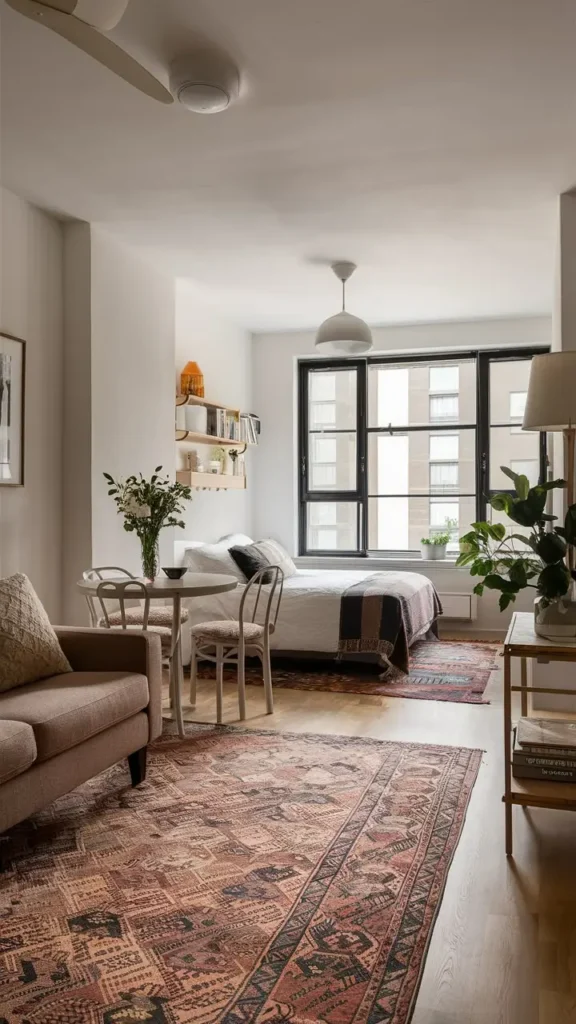
Rugs are one of my favorite design elements. I love the textures, patterns, colors, and warmth they bring to a space, but beyond aesthetics, rugs also serve an incredibly important functional purpose: defining zones.
Without rugs, furniture can sometimes feel like it’s floating aimlessly within a room. Rugs act almost like picture frames for furniture layouts, helping establish intentional areas and boundaries.
In a studio apartment, this becomes especially important. A rug under the sofa can define the living room area, while another rug under the bed can visually separate the sleeping zone. These subtle divisions help the apartment feel more organized and thoughtfully designed.
Use Your Sofa as a Divider
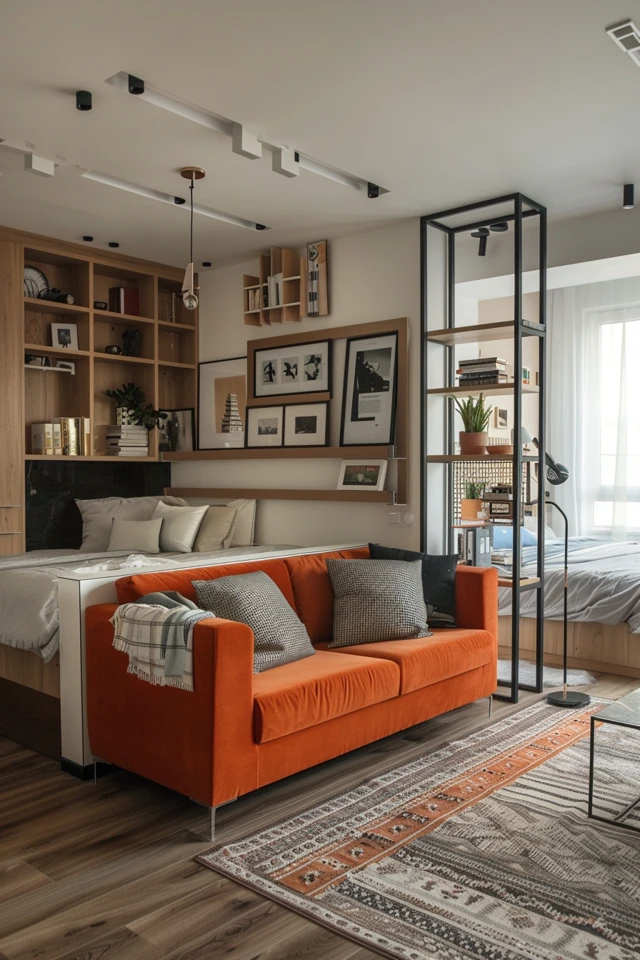
One of the biggest interior design mistakes I see people make is assuming a sofa always needs to be pushed against a wall. In reality, furniture is allowed to float within a space, and doing so can actually improve both the functionality and flow of a room.
In a studio apartment, a floating sofa can act as a divider between the living and sleeping areas without the need for additional partitions. The back of the sofa naturally creates separation while still maintaining an open and airy feel.
When planning your layout, consider how your furniture itself can help define different zones within the apartment.
Consider Modular Furniture
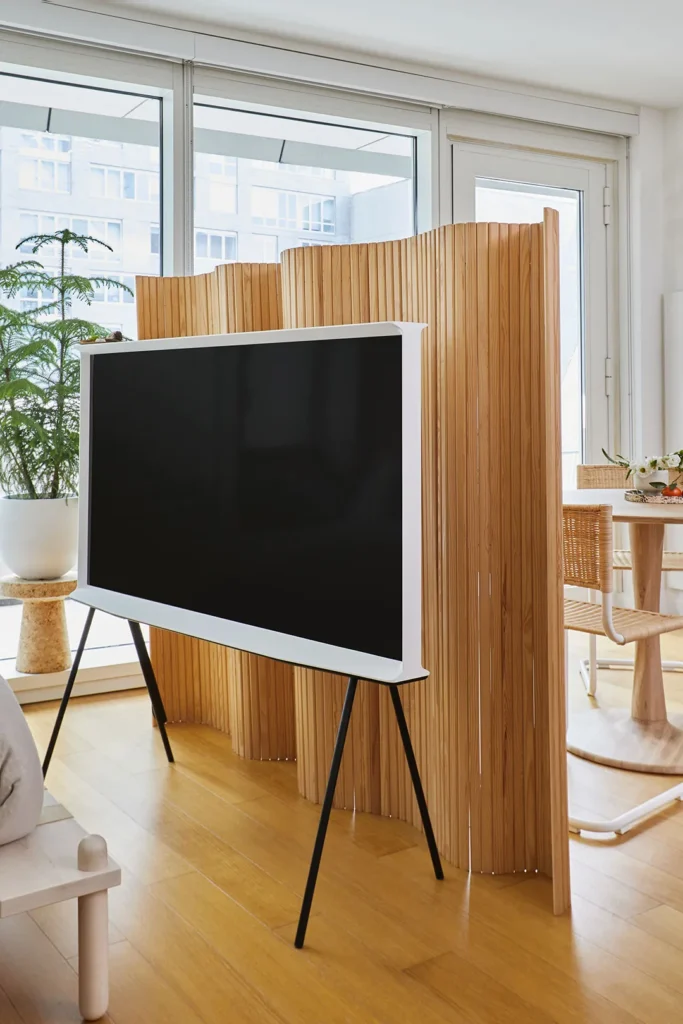
When it comes to small apartments and compact living, modular and movable furniture can be a game-changer. Flexibility is key in multifunctional spaces.
This could mean:
- A TV on a movable stand that can be wheeled around the apartment
- Small ottomans that can function as seating, side tables, or footrests
- Nesting tables or smaller coffee tables instead of one oversized piece
- Lightweight accent chairs that can easily be repositioned when entertaining
Smaller and more flexible furniture pieces tend to work better in studio apartments because they allow the space to evolve and adapt depending on your needs throughout the day.
Consider a Canopy Bed
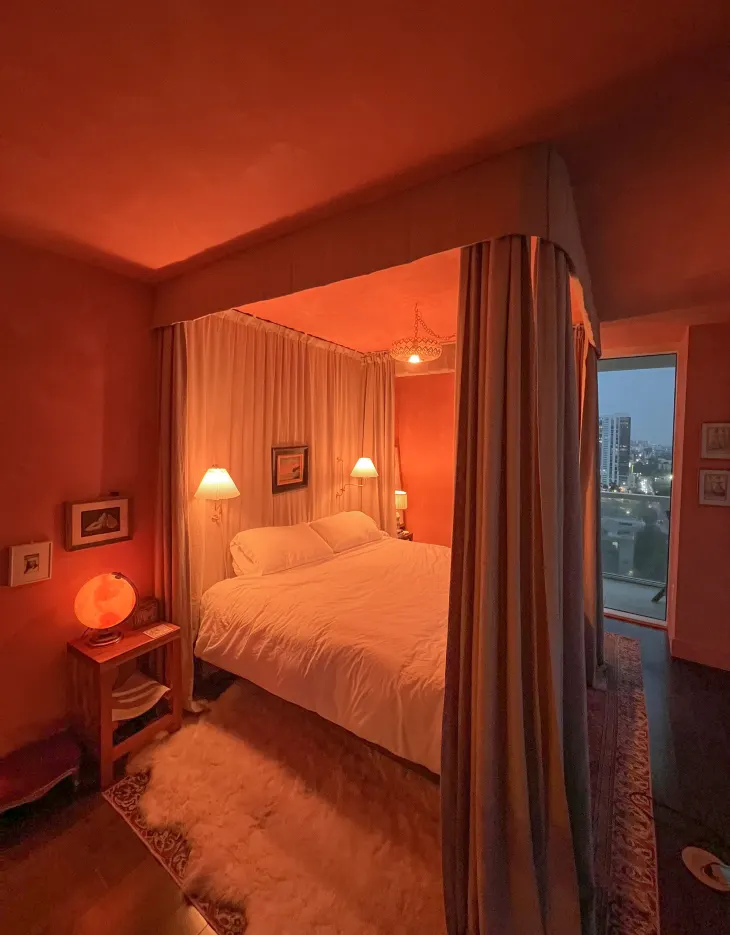
A canopy bed can actually work beautifully in a studio apartment, especially if you want to create a cozy and romantic sleeping area without introducing bulky dividers.
The frame itself subtly defines the bedroom zone while maintaining openness and airflow within the apartment. I personally love canopy beds because they evoke a sense of softness, femininity, and sensuality while still feeling airy and elegant.
In a studio apartment, a canopy bed can become both a functional layout tool and a stunning focal point within the design.
Also Read: Small Living Room Layout: How to Fit a Couch and TV in a Tiny Space
Click Here To Shop My Favourite Home Goods
Let’s design your space together, virtually.