How to Make a Dining Nook More Cozy: 18 Designer Tips
A dining nook can easily become one of the most charming areas in a home.
Whether it is tucked into the corner of a kitchen, built into a bay window, or carved out of a small apartment, a dining nook has the potential to feel much more intimate than a traditional dining room.
But if it is not designed thoughtfully, it can also feel a little unfinished.
The good news is that making a dining nook feel cozy does not necessarily require a renovation or a huge budget. In most cases, it comes down to layering the right furniture, lighting, texture, color, and styling.
As an interior designer, I think the best dining nooks are the ones that feel intentional, comfortable, and a little bit cocooned.
Here are some of the best ways to make a dining nook feel more cozy and inviting.
AVOID COSTLY (AND UGLY) DESIGN MISTAKES
Start With Comfortable Seating
See more of this project here.
If you want your dining nook to feel cozy, comfort should be the first consideration.
A hard chair tucked into a corner can technically create a dining area, but it is probably not going to make you want to sit there for long.
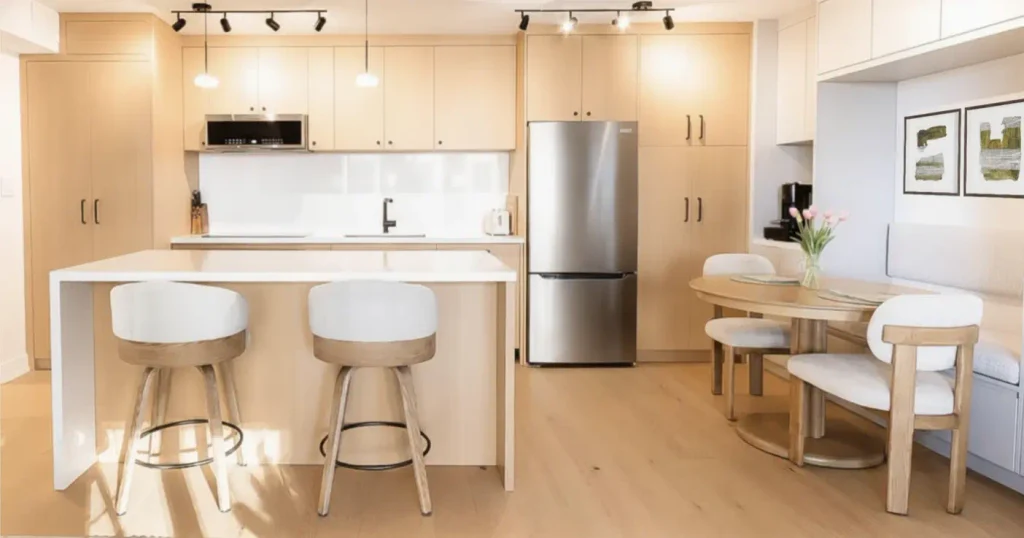
One of my favorite ways to make a dining nook feel warmer is to introduce upholstered seating.
This could be:
- a built-in banquette
- a freestanding dining bench
- upholstered dining chairs
- a corner bench with cushions
- a small settee
Built-in banquettes are especially effective because they naturally make the space feel more intimate, kind of like a booth in a restaurant does (everyone wants a seat at the booth!).
They also work really well in small homes because they can provide additional storage underneath the seat.
If built-ins are not an option, a simple upholstered bench against the wall can create a very similar feeling.
Add Cushions and Soft Textiles
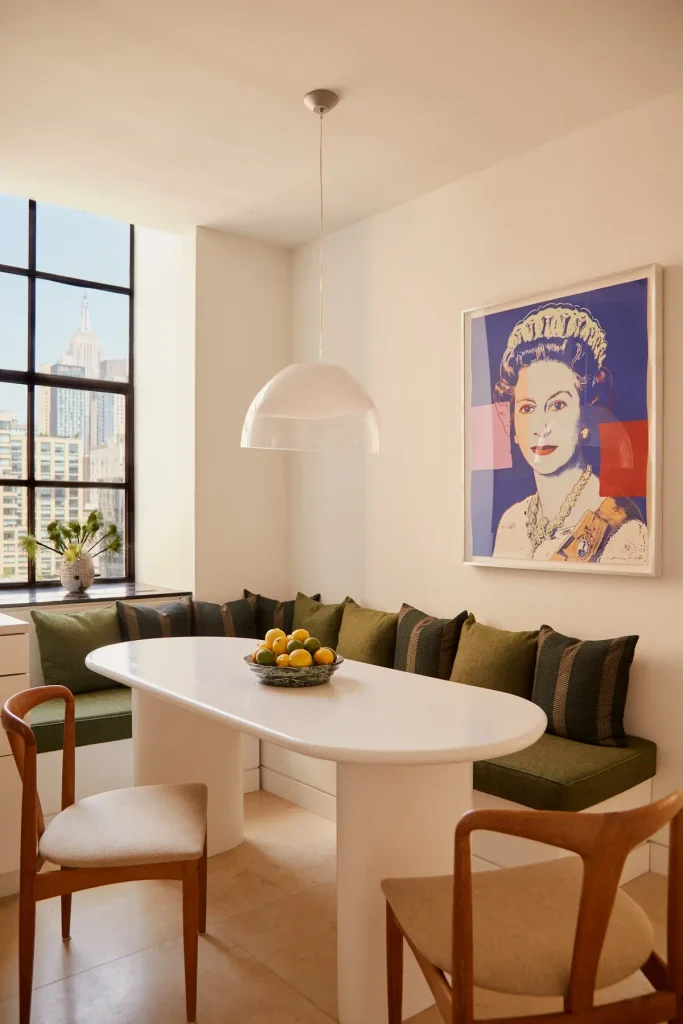
Once you have the main seating in place, layer in softness.
This is where dining nooks can start to feel less like a table pushed into a corner and more like a little room within a room.
Add:
- seat cushions
- throw pillows
- lumbar cushions
- textured fabrics
- linen or wool
If you are using a banquette, I usually like to combine one or two larger cushions with smaller accent pillows rather than lining the entire seat with lots of tiny pillows.
You want it to feel relaxed, but you still need enough space to actually sit and eat comfortably.
For fabrics, look for something that feels tactile but is also practical.
Performance fabrics are a great choice for dining spaces because they can handle spills and everyday use better than delicate upholstery.
Add a Chandelier

See more of this project here.
Lighting makes a huge difference in how cozy a dining nook feels.
If the only light source is a bright ceiling pot light, the area may feel more functional than inviting.
Whenever possible, I like to introduce a pendant or small chandelier over the dining table.
This visually anchors the nook and makes it feel like its own designated zone.
The fixture does not need to be huge.
In fact, in a small dining nook, a smaller fixture often feels more appropriate.
Look for materials such as:
- linen shades
- opal glass
- aged brass
- woven fibers
- warm metals
- frosted glass
And always pay attention to the bulb temperature.
A warm white bulb, generally around 2700K, will create a much softer atmosphere than a cool white bulb.
Add a Rug
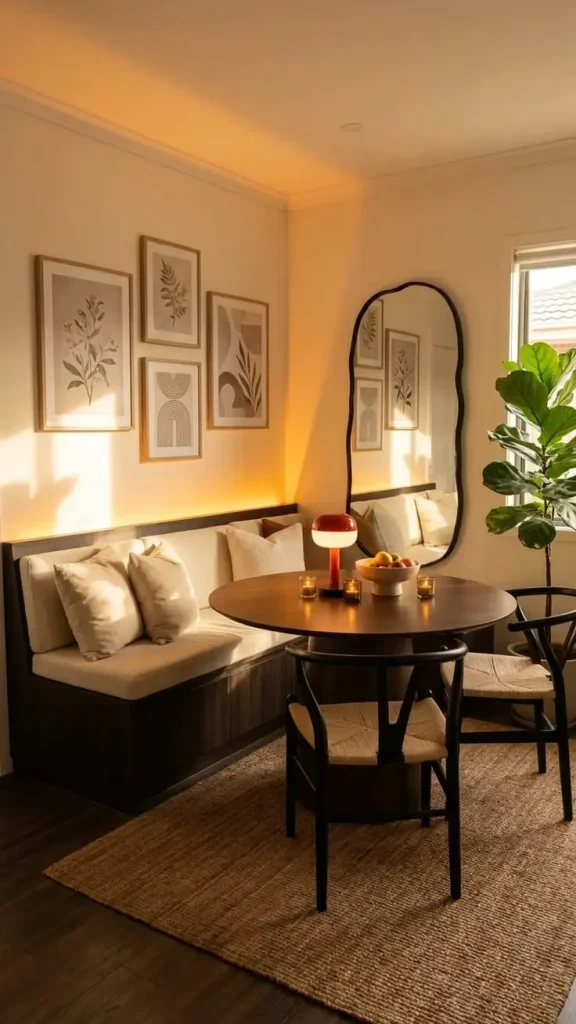
A rug is one of the easiest ways to make a dining nook feel more grounded and cozy.
It visually defines the dining zone and adds warmth underfoot.
This is especially helpful if your dining nook is located within an open-concept kitchen or living area.
Without a rug, the nook can sometimes feel like it is floating within the larger room.
When choosing a rug, make sure it is large enough that the dining chairs can stay on the rug even when they are pulled out.
A rug that is too small can actually make the nook feel more cramped.
For dining spaces, I usually recommend rugs that are:
- low pile
- easy to clean
- tightly woven
- washable, if practical
Vintage-inspired rugs can also be beautiful because they add pattern and character without feeling overly formal.
Introduce Wood
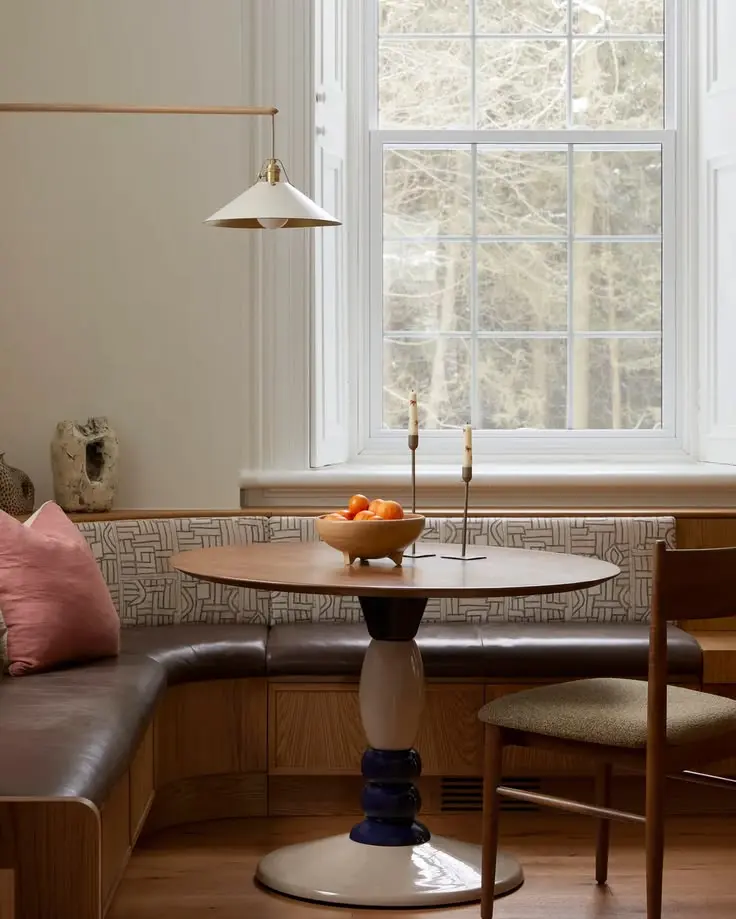
Wood is one of the easiest materials to use if you want to make a space feel warmer.
If your dining nook currently feels cold or flat, look for opportunities to introduce wood through:
- the dining table
- chairs
- a bench
- shelving
- picture frames
- wall paneling
A natural wood table can instantly soften a space with lots of white, gray, or hard finishes.
If you already have wood flooring, you do not need to match the table exactly.
In fact, mixing wood tones can make a room feel more layered and natural.
Add Wall Treatment
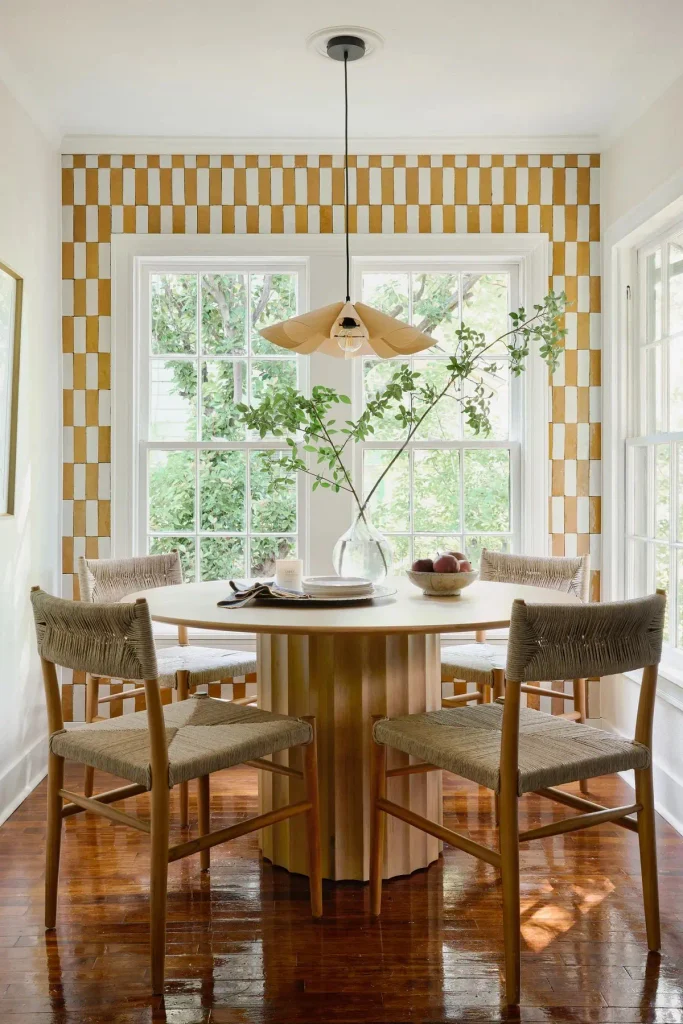
If your dining nook feels unfinished, the walls may be the reason.
Because dining nooks are usually small, they are actually a great place to do something a little more interesting.
You could consider:
- wallpaper
- beadboard
- wall paneling
- picture-frame molding
- paint
- limewash
- plaster-style finishes
Wallpaper can be particularly effective in a dining nook because it helps visually define the space.
A subtle botanical, stripe, block print, or textured wallpaper can make the nook feel much more intentional without overwhelming it.
If you want something more understated, simply painting the nook a different color from the surrounding kitchen can also create separation.
Use a Warmer Paint Color
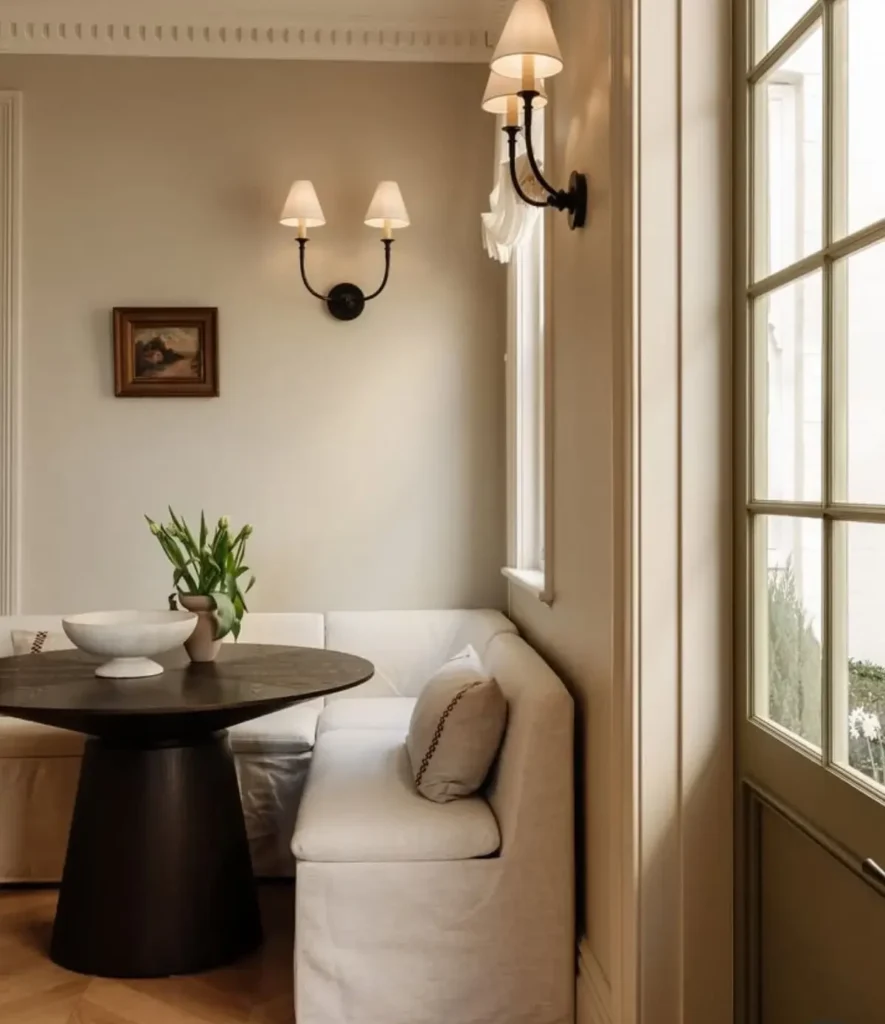
Color has a huge impact on how cozy a space feels.
If your dining nook is surrounded by very cool white or gray finishes, it may feel a little sterile.
You can warm it up with colors like:
- warm beige
- taupe
- soft brown
- muted olive
- clay
- warm cream
- dusty blue
- burgundy
You do not necessarily need to go dark.
Even a subtle warm neutral can make a major difference.
If the nook is small and enclosed, you can also lean into a deeper color.
Sometimes trying to make a small space feel bigger is not actually the most interesting design choice.
Making it feel more intimate can be much more effective.
Add Curtains or Roman Shades
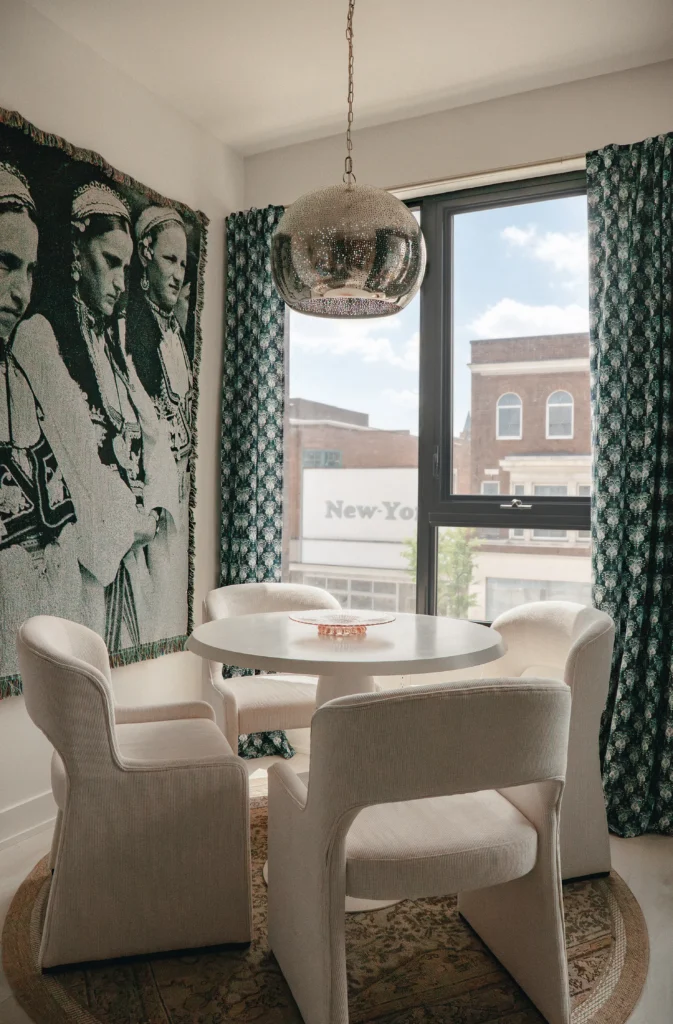
Shop this look, here.
If your dining nook is beside a window, window treatments can make it feel much softer.
Bare windows can make a dining area feel unfinished, especially if the rest of the room already has a lot of hard surfaces.
Consider:
- linen curtains
- Roman shades
- woven shades
- relaxed café curtains
These add texture and help soften the architecture.
If the nook is small, café curtains can be especially charming because they give privacy while still allowing natural light in.
Create a Focal Point
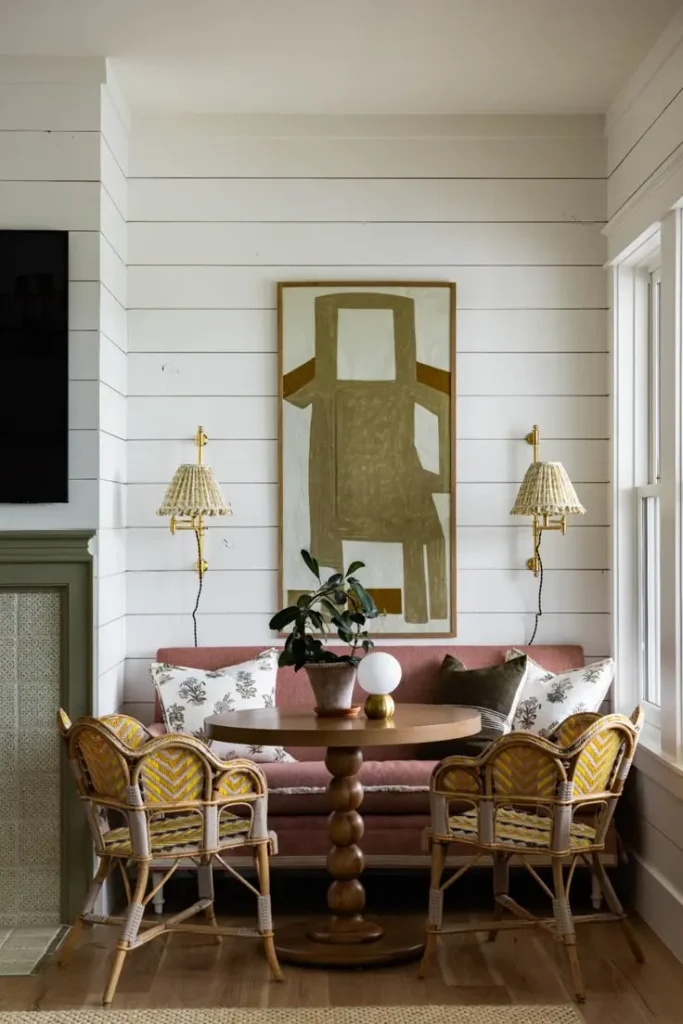
A cozy dining nook usually benefits from having one strong focal point.
This could be:
- a beautiful pendant light
- a piece of artwork
- wallpaper
- a statement table
- a built-in bench
- a gallery wall
You do not need all of these things at once.
In fact, too many focal points can make a small nook feel busy.
Choose one main element and let the rest of the design support it.
Add Artwork
Artwork is an easy way to give a dining nook personality.
You could hang:
- one large piece
- two smaller pieces
- a simple gallery wall
- framed vintage prints
- photography
For a cozy look, I usually prefer artwork that feels a little softer and less polished.
Vintage-inspired prints, landscapes, sketches, and botanical artwork tend to work particularly well.
The goal is to make the nook feel collected rather than overly staged.
Use a Round Table in a Small Dining Nook
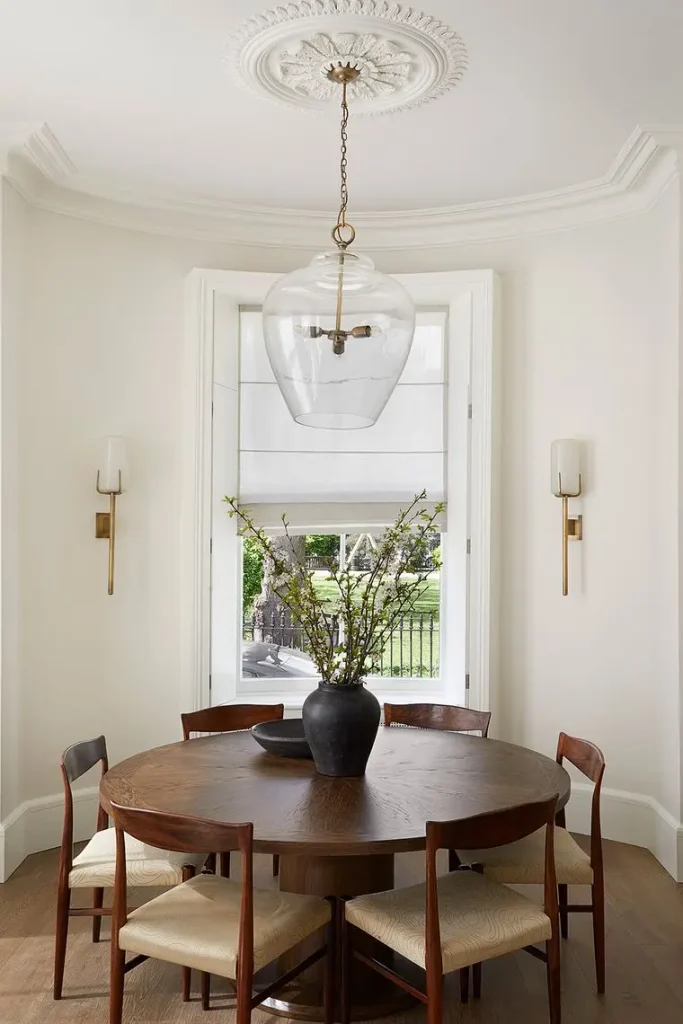
For tighter dining nooks, a round table can be a great choice.
Round tables generally allow for easier circulation and can make a small area feel less rigid.
They are especially useful when the nook is located in:
- a corner
- a bay window
- a small kitchen
- a compact apartment
A pedestal table can also be helpful because it eliminates corner legs, giving people a little more flexibility when sitting.
Keep the Table Proportional
One of the fastest ways to make a dining nook feel uncomfortable is to choose a table that is too large.
The table should fit the space without making the nook feel crowded.
You still need enough room for people to sit down, move chairs, and walk around the area.
In a small dining nook, I would rather choose a slightly smaller table and make the space feel comfortable than squeeze in something oversized simply to seat more people.
Add a Small Table Lamp
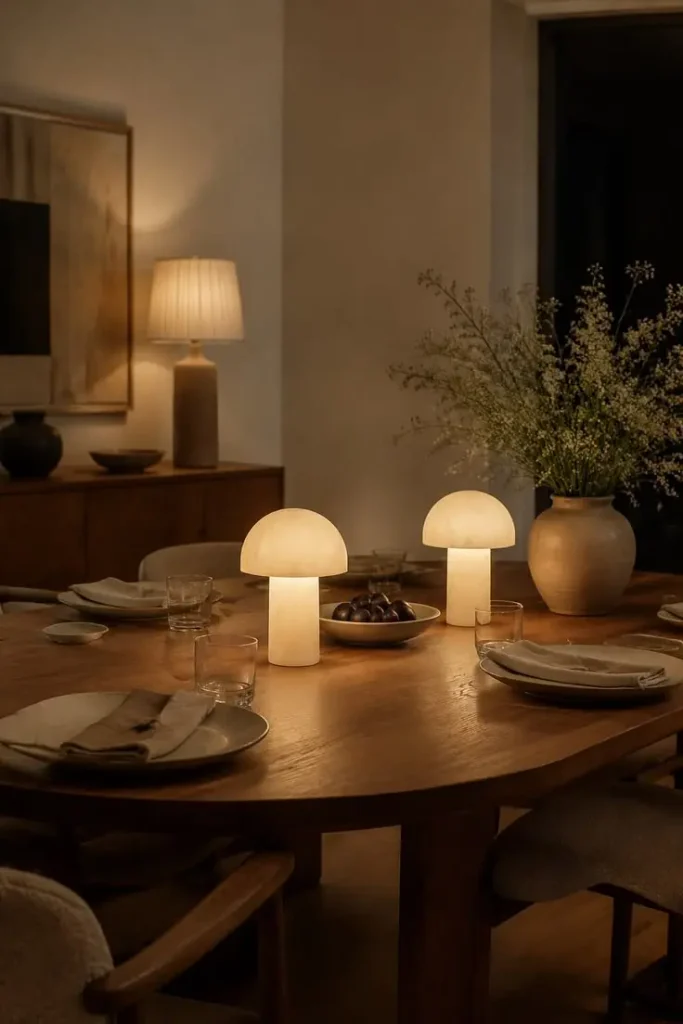
This is one of my favorite ways to make a dining nook feel more intimate.
If you have a sideboard, ledge, or built-in shelf nearby, add a small table lamp.
A lamp creates a much softer glow than overhead lighting and can make the nook feel almost café-like in the evening.
This works especially well if the dining nook doubles as a place to:
- have coffee
- work
- read
- sit with a laptop
- relax in the evening
Bring in Natural Materials
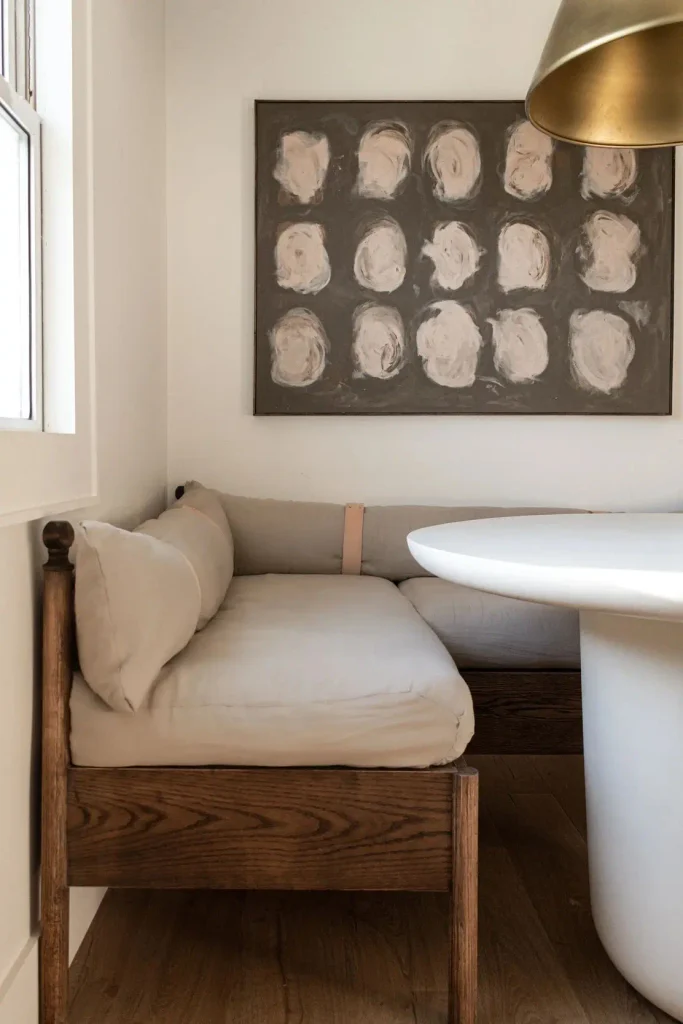
Natural materials make a dining nook feel warmer and more relaxed.
Think:
- wood
- linen
- rattan
- cane
- stone
- wool
- ceramic
- woven baskets
You do not need to use all of them.
Even adding one or two natural materials can soften a space that otherwise feels too polished.
For example, a wood table paired with linen seat cushions and a ceramic pendant can create a very cozy combination.
Do Not Overcrowd the Space
Cozy and cluttered are not the same thing.
A dining nook should feel layered, but still functional.
If you add too many pillows, too many accessories, too many chairs, and too much artwork, the nook can start to feel visually heavy.
Focus on a few intentional elements.
A table.
Comfortable seating.
Good lighting.
One focal point.
Some texture.
That is usually enough.
Add Greenery
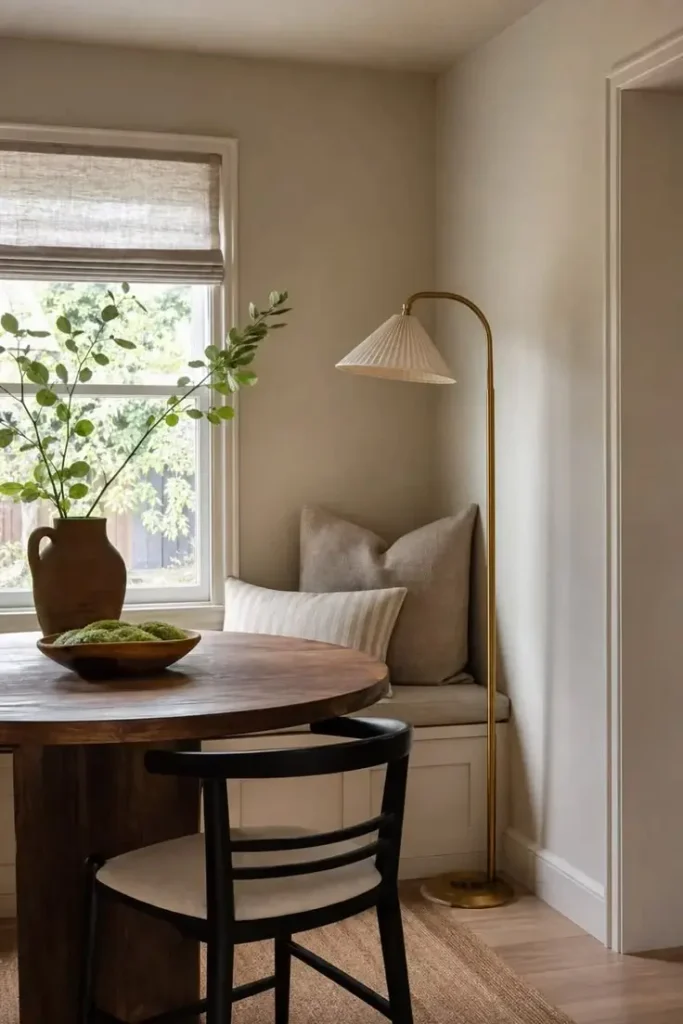
A small plant or vase with branches can bring life to a dining nook.
You do not need a giant indoor tree.
Even a simple vase of greenery on the table can make the area feel fresher.
If your dining nook gets natural light, a small plant on a nearby ledge or shelf can also work well.
Make the Nook Feel Connected to the Rest of the Home
A dining nook should feel distinct, but it should not feel random.
Repeat something from the surrounding room.
That could be:
- a color
- a wood tone
- a metal finish
- a fabric
- a pattern
For example, if your kitchen has brass hardware, you could introduce a brass pendant over the dining table.
If your living room has olive green accents, bring that color into a seat cushion or artwork.
This helps the nook feel intentional and connected.
How to Make a Dining Nook Cozy in a Small Apartment
In a small apartment, the biggest challenge is usually making the dining nook feel special without taking up too much room.
I would focus on:
- a round or oval table
- a bench against the wall
- upholstered seating
- a pendant light
- one piece of artwork
- a small rug
- warm neutral colors
This is enough to create a separate dining zone without making the space feel crowded.
If possible, use furniture that can do more than one job.
A storage bench, pedestal table, or expandable dining table can all be practical options.
Click Here To Shop My Favourite Home Goods
Let’s design your space together, virtually.